NATIONAL ORGANIZATION FOR THE REFORM OF MARIJUANA LAWS |
|
1001 CONNECTICUT AVENUE NW |
|
T 202-483-5500 • F 202-483-0057 • E-MAIL NATLNORML@AOL.COM
Internet http://www.norml.org
. . . a weekly service for the media on news related to Marijuana Prohibition.
April 17, 1997
Doctors Free To Recommend Medical Use Of Marijuana,
Federal Judge Rules

High Court Strikes Down Law Mandating Drug Testing Of Political Candidates
State Legislature Puts The Brakes On Voter-Approved Medical Marijuana Provision
-END-
MORE THAN 10 MILLION MARIJUANA ARRESTS SINCE 1965 . . . ANOTHER EVERY 54 SECONDS! |
| © copyright 1997 NORML | NORML Home Page | comments: norml@natlnorml.org |
Regional and other news
That still leaves at least 38,871 illegal-drug users in Multnomah County, including 29,930 past-month marijuana consumers, according to the government's own most conservative estimates in the National Household Survey on Drug Abuse and the U.S. Census Bureau, as documented in the Aug. 29, 1996 Portland NORML Weekly News Release (http://www.pdxnorml.org/082996.html#ldt).
At least 22,156 county residents use marijuana as their only illicit drug. According to the latest Multnomah County figures, building jails for all of the illegal-drug users in the county would cost $5,694,885,200, almost $5.7 billion. With interest on new-jail bonds, the real cost would come to $14,898,165,000, almost $15 billion.
Constructing jails just for all the estimated pot-smokers in Multnomah County would cost $4,384,963,400, more than $4.3 billion. With interest, the real cost would be $11,471,330,000, more than $11 billion.
Building jails just for the estimated 16,714 Multnomah County residents (43 percent of 7.8 percent) who use illegal drugs other than marijuana would cost $2,448,723,000, almost $2.5 billion. With interest the real cost would be $6,406,008,200, or more than $6 billion. Just building jail beds for five percent to 10 percent of illegal-drug users who sell, smuggle or "manufacture" drugs in Multnomah County (1,943 to 3,887) would nominally cost at least $284 million to $569 million. With interest, the real cost would be at least $744 million to $1.5 billion (ibid.).
So how many controlled-substance offenders should we lock up to achieve the best results?
In two years Portland NORML has never been able to get a single public official or mass medium to address that obvious question. Oregonians whose primary interest is adequately funding education, parks, services to children, families, the poor or elderly, or any other government-funded service not related to prisons, had better speak up soon. Once new prisons go online, the costs of running them will kill off services already being drained dry. If you don't believe Portland NORML, do the numbers yourself.
Who's got the denial problem now?
Oregon Drugs Control Amendment Circulates
 Floyd Ferris Landrath and the American Anti-Prohibition League have certified a state initiative petition that would comprehensively regulate all currently controlled substances, including cannabis.
The Oregon Drugs Control Amendment, or ODCA, has its own World Wide Web site at http://ns2.calyx.net/~odca
ODCA would take control of currently illegal substances away from criminals, oblige Oregon to spend more on treatment and less on prisons, allow Oregon doctors to prescribe any drug that will help their sick, gravely injured, and dying patients, and allow Oregon farmers to grow industrial hemp. For more information or to volunteer for signature-gathering e-mail Landrath or call (503) 235-4524 or come to weekly meetings 7:30 pm Thursdays at the Phantom Gallery, 3125 SE Belmont St., Portland, OR 97214.
ODCA should not be confused with OCTA, the Oregon Cannabis Tax Act, a different initiative that would comprehensively regulate cannabis for medical, industrial and intoxicant uses (http://www.crrh.org/).
The Star-Ledger [Newark, NJ], April 6, 1997
There's been a big boom since the beginning of the year," said Lt. Mark Spitzer, who heads Mount Olive's narcotics unit.
In the past six weeks, police broke up two organized teenage drug rings and are investigating four similar cases in which youths are selling cocaine, heroin, marijuana and "club" drugs - such as Ecstasy and "Special K" - to other children.
Two drug operations headed by teenagers in neighboring Roxbury and Washington Township were infiltrated in January by undercover detectives, who arrested 11 people and seized $3,000 in LSD, marijuana and heroin and $2,200 in cash.
"This is new for us. It's never been this organized," said Mount Olive Officer Joseph Kluska, department spokesman.
The problem is countywide, Morris Country Prosecutor John Dangler said. "We're seeing more and more cases" in which teenagers "are the ones doing the major distributions," rather than just working for adult drug dealers, Dangler said.
"The common denominator is the age group: The extremely young, brazen crowd," Mount Olive narcotics Detective Michael Patchunka said.
Lt. Thomas Polio, who heads the prosecutor's narcotics task force, said more teenagers are going to New York and other cities for "raves," all-night dance parties where drugs are sold openly.
"It's the open-air market coming to suburbia," Polio said. "They think, `If they can do that there, we can do that here.'"
'Teenagers are playing the middle man," buying drugs in New York City, Paterson, Newark and East Orange and re-selling them in Morris County, Spitzer said.
A 18 year-old recovering drug addict named Jason, who also dabbled in dealing, said there is a comfort level in buying from peers.
"I felt I could trust them a little more, said Jason who twice bought marijuana from teenagers in Mount Olive and often bought cocaine from both teenagers and adults in his hometown of Morristown.
Jason, who has been in a residential drug treatment program at Daytop Village Inc. in Mendham for 10 months, said he used to buy drugs in restrooms in Morristown High and even in classrooms. While in class, he would place money in a textbook, pass it to a classmate, and the book would come back to him with cocaine in it, he said.
More than 50 Mount Olive teenagers were counted among the customers of the two raided teenage drug operations in Mount Olive, and those in Roxbury and Washington Township.
Police arrested six Mount Olive teens and a 14-year-old Parsippany boy Feb. 28 on charges of running a small-scale drug operation out of a Brewster Place home in the Flanders section.
Detectives bought drugs during a two-month investigation and then seized a 1985 Dodge Daytona which police say was used to transport some of the suspects to and from suppliers in New York.
Police raided the Brewster Place home and seized five bags of crack cocaine and two bags of marijuana, as well as drug paraphernalia.
Three weeks later, two Mount Olive High students and an 18-year-old man who had attended the school were arrested in a drug-dealing operation.
Police raided the home of Mark J. Jaskulski, who lives with his grandparents, on March 22, and arrested Jaskulski and a 16-year-old girl on charges of cocaine possession and possession with intent to distribute. A 17-year-old boy was arrested two days later at the high school.
The Washington Township teenager believed to be selling heroin from his home had once bragged to police that "there's nothing you can do to me," Detective Patchunka said.
Punishments for juveniles are much less severe than those for adults, said Prosecutor Dangler, who feels that must be changed to stop the teenage drug trade. But he's not sure how that can be accomplished, he said.
Getting caught selling drugs has got to be made "an unpleasant experience, (so) they don't want to revisit the juvenile justice system," Dangler said.
All types of juvenile crimes in Morris County are on the rise climbing from 800 juvenile prosecutions in 1995 to 1,100 last year - and 75 percent of them are linked to drugs, the prosecutor said.
[Note the teens were apparently not trafficking in alcohol or cigarettes, which are regulated. - ed.]
Blame It On Prohibition - Morris, NJ Teens Run Drug Rings
"Morris cops find teens running drug rings
Students more comfortable buying from peers"
By Margaret McHugh
Star-Ledger Staff
 Morris County's escalating teenage drug problem has taken an alarming twist in areas like suburban Mount Olive, where youths are setting up shop as dealers and are drumming up business from area high schools.
Drug Policy Foundation Web Site Goes Online
Drug Reform Coordination Network (DRCNet) News Advisory
DPF Launches www.dpf.org
WASHINGTON, April 17 - The Drug Policy Foundation today opens its World Wide Web site.
The inaugural version of the site contains extensive information about DPF's mission and programs, news about its 11th international conference in October, recent editions of The Drug Policy Letter, and chat rooms and forums.
"The site addresses basic drug policy reform issues and how DPF represents those ideas," DPF President Arnold Trebach said. "The Web has a wealth of drug policy information on it, and DPF hopes to amplify that knowledge as well as contribute ideas from the foundation's 10-year history."
The site's address is advertised in two DPF ads that appear in the May edition of Wired magazine. This is the third set of DPF ads to appear in space donated by Wired this year.
"DPF is especially proud to have Wired's support," Trebach said. "Wired is shining a light on one of the darkest areas of the American dialogue. Wired's role in the information revolution will ensure that cruel policies like the drug war, which thrive in the dark, cannot survive unexamined."
DPF's site can also be reached at http://www.drugpolicy.org/
This site is launched in the spirit of Thomas Jefferson, whose 254th birthday was Sunday, because 1) he would have been a strong proponent of the Internet as a part of the marketplace of ideas, and 2) he rejected federal attempts at drug control before such policies became fashionable. Writing in "Notes on the State of Virginia" (1787), Jefferson observed:
"Was the government to prescribe to us our medicine and diet, our bodies would be in such keeping as our souls are now. Thus in France the emetic was once forbidden as a medicine, and the potato as an article of food. Government is just as fallible, too, when it fixes systems in physics. Galileo was sent to the Inquisition for affirming that the earth was a sphere; the government had declared it to be as flat as a trencher, and Galileo was obliged to abjure his error. ... Reason and experiment have been indulged, and error has fled before them. It is error alone which needs the support of government. Truth can stand by itself."
Drug Reform Coordination Network (DRCNet)
4455 Connecticut Ave., NW, Suite B-500, Washington, DC 20008
(202) 362-0030 (voice) / (202) 362-0032 (fax)
drcinfo@drcnet.org / http://www.drcnet.org
by The Los Angeles Times and the Associated Press
In issuing the temporary restraining order, U.S. District Judge Fern Smith urged both sides to settle their differences.
Backers of medical marijuana, which was legalized in California by last November's Proposition 215 but remains illegal under federal law, called Smith's ruling a major victory.
"Today's ruling protects doctors and patients and Proposition 215," said Dave Fratello, a spokesman for Americans for Medical Rights, which sponsored the initiative. He said it is time for Clinton-administration officials "to end their threats and let Proposition 215 work as the voters intended."
Patricia Seitz, chief lawyer for Clinton's office of drug policy, said she was disappointed by the ruling but expressed hope a compromise could be reached.
The lawsuit was filed by several Bay Area doctors and patients after federal officials threatened a crackdown in the aftermath of Proposition 215, which allows the possession and cultivation of marijuana for medical use if recommended by a doctor.
Federal drug czar Barry McCaffrey announced in December that doctors who recommend pot would face the loss of their federal authority to prescribe medicine, be excluded from Medicare and potentially face criminal prosecution.
Although there have been only isolated episodes of federal drug agents contacting doctors, the federal decree prompted protest from physicians interested in medical marijuana as a potential treatment for patients suffering nausea from chemotherapy, AIDS wasting or glaucoma. They said it had a chilling effect on their ability to talk with patients about the drug.
U.S. officials in February attempted to clarify their position in a letter to medical leaders stressing they could discuss the use of marijuana as medicine with patients but could not recommend it as a treatment as outlined in Proposition 215.
During yesterday's court hearing, Smith said the difference between "discuss" and "recommend" was unclear, leaving physicians grappling to understand what they could discuss with patients. In a written ruling, she said the lawsuit raises "at least a serious question" whether the government threats were undermining physician rights to free speech.
She also said that doctors have censored their discussions with patients about marijuana because they don't know what they are allowed to say.
2) "Judge Supports California Doctors on Marijuana Issue"
The New York Times, April 12, 1997
SAN FRANCISCO - A federal district judge on Friday barred the Clinton administration from taking action to punish doctors in California who recommended marijuana to their patients under a new state law.
The restraining order, issued by Judge Fern Smith, will at least temporarily stop the federal government's effort to undermine the California law by threatening to prosecute or strip the prescription licenses of doctors who endorse the medical use of the drug.
But Judge Smith also ordered lawyers for the administration and those representing a group of doctors who filed suit against the government three months ago to begin meeting with another federal judge to try to work out a settlement of the dispute.
While the future of the law remains far from clear, its proponents hailed the ruling Friday as an important victory in their campaign to make marijuana available to people suffering from diseases like cancer, glaucoma and AIDS.
"The federal government, as part of its war on drugs, had declared war on California doctors," said Graham Boyd, who argued the case for the doctors. "Now they no longer need to fear draconian federal punishments for recommending marijuana."
Clinton administration officials have denounced the California law and a similar successful ballot initiative in Arizona as significant threats to the government's efforts to limit the traffic in illegal drugs and to persuade younger Americans, in particular, not to use them.
California's law, which went to the voters in November as Proposition 215, legalizes the possession or cultivation of marijuana when its use is "recommended" by a doctor. Under a more complicated procedure in Arizona, doctors can actually prescribe other Schedule 1 designated drugs, including heroin and methamphetamine.
The authors of Proposition 215 sought to make it possible for doctors to suggest the use of marijuana to their patients without putting the legislation in conflict with federal laws that bar the use and distribution of controlled substances. And it was an early sign of their success when, little more than a month after its passage, Justice Department lawyers decided not to try to fight the measure in the courts.
Instead, the White House Office of National Drug Control Policy led the government in a public-relations offensive.
A handful of agencies, like the Department of Transportation, have reiterated federal laws against operating cars, aircraft and equipment while under the influence of marijuana.
Under the auspices of the National Institutes of Health, government scientists have also undertaken to determine once and for all whether marijuana has any legitimate value for such problems as the nausea often caused by chemotherapy, the eye pressure often associated with glaucoma and the "wasting" syndrome that afflicts people with AIDS.
Most important, though, law-enforcement officials have tried to frighten doctors away from the new law by warning that they could lose the prescription licenses they receive from the Drug Enforcement Administration or could even face criminal prosecution.
Both sides expected that they would eventually meet in court when the federal government moved against a doctor or patient who tried to make use of the law.
But in the suit filed on Jan. 14 on behalf of a group of California doctors, Boyd and other lawyers supporting the law pre-empted such a test case, arguing that the threat constituted a violation of the physicians' right to free speech. The doctors were being enjoined, they asserted, from simply discussing with their patients a treatment they had legitimate reason to think might be helpful.
The legal counsel for the drug-policy office, Patricia Seitz, said the government respected the right of doctors to discuss the benefits and hazards of treatments with their patients. But it opposes any effort by physicians to help them obtain illegal drugs.
"It is not protected speech if that speech is used to violate the law," Ms. Seitz said. "The issue always boils down to what is the doctor's intent."
In issuing the temporary restraining order Friday, Judge Smith said the doctors had raised "serious questions" about whether the federal government's threats of punishment are constitutional. Because the case involves the First Amendment, she added, the possibility of the sort of harm to the doctors that might warrant protection by the court is especially clear.
The doctors' lawyer, Boyd, said those findings would by themselves justify the granting of a preliminary injunction to block the administration's policy if the two sides are unable to resolve their differences in the settlement effort that is to get under way next week with another federal district judge acting as a mediator.
A federal government lawyer in the case disagreed.
"We didn't lose altogether," said the official, who briefed reporters on the condition that he not be identified. Referring to Judge Smith, he added, "She is just keeping the status quo until we reach a settlement.
"Ultimately, if there is an injunction that says we cannot enforce the Controlled Substances Act, we will probably appeal her decision."
3) "Judge Defends Doctors In Pot Fight"
The San Francisco Examiner, April 11, 1997, p. A1
A federal judge in San Francisco issued a temporary injunction Friday preventing the government from taking action against doctors who recommend marijuana for their patients. U.S. District Judge Fern Smith said government lawyers hadn't convinced her the U.S. had a clear policy on the distinction between discussing marijuana with a patient and actually recommending it.
"I am continually concerned with the distinction between discussion and recommendation," she said in ordering the government and lawyers for a doctors group to have a settlement conference to discuss their differences. "You should not have to wait and be careful about what you say because you're unsure and concerned that you are breaking the law."
Her injunction came in a suit brought by a group of Bay Area doctors that contended governmental threats of punishment for prescribing medical marijuana violated their constitutional free speech rights and interfered with doctor-patient relationships.
At midday, attorneys for both sides were meeting to set a date for the settlement conference.
Doctors have a right to advise patients "with the full understanding of what the law requires and forbids," Smith said in granting the temporary injunction. She gave Justice Department attorneys the opportunity to modify the government policy but attorney Kathleen Muller said the government would not agree to allowing physicians to recommend marijuana use.
California voters approved the use of medical marijuana in November but the Clinton Administration has held that federal law supersedes the state's wishes.
At the heart of the debate is whether the Clinton administration's drug policies violate physicians' free speech rights to discuss a full range of treatments for their patients.
Federal attorneys unsuccessfully sought to have the suit dismissed.
The federal policy, outlined by U.S. drug czar Barry McCaffrey on Dec. 30, says doctors who recommend or prescribe marijuana could face criminal prosecution, lose their federal authority to prescribe medications and be excluded from Medicare and Medicaid.
Lawyers for the physicians contended Friday that the federal position, although it does not prohibit discussion of marijuana, has a chilling effect on doctors and is confusing. "The government has failed to outline a clear and unambiguous policy about what doctors can and can't say to their patients about this issue," said San Francisco attorney Lowell Finley, one of the plaintiffs' lawyers.
Federal lawyers have argued the government's policy was not intended to hamper doctors' freedom to discuss various treatments, but it prohibits them from prescribing or recommending marijuana and other illegal drugs, which is a violation of federal law.
At a press conference Thursday, Patricia Seitz, chief legal counsel for the White House Office of National Drug Control Policy, said the government's interest is in protecting the public, especially children, from illegal drugs.
"The concern that we have is that once you can determine by the ballot box rather than a rigorous scientific process what is a medicine, we start the slippery slope," Seitz said. "What prevents us from tomorrow saying, "OK, LSD is a great medicine, or heroin.' This is the concern."
Finley said, "It is fair to say that the voters of California and Arizona did not, by their vote, attempt to make binding decisions on the medical efficacy of marijuana. "What they said is patients should not be subject to prosecution when they get marijuana based on the advice of a physician that it provides relief from symptoms when they suffer from a serious illness."
"The lawsuit is about whether a trained physician should be permitted to fully discuss their views on whether marijuana would provide benefits to a patient or not," he said.
Seitz also disputed the free speech claim, saying, "Speech that is used to violate the law is not protected by the constitution."
What supporters of medical marijuana really want is blanket immunity from prosecution, Seitz charged.
Appearing with Seitz was a doctor who treats AIDS patients, who said more research is necessary to determine marijuana's medical efficacy.
Although marijuana appears to be effective in increasing patients' appetites and countering the wasting syndrome common with AIDS, other synthetic drugs are more or as effective, said Dr. Gary Cohan of the Pacific Oaks Medical Group in Beverly Hills, which has a large AIDS practice. Meanwhile, a San Francisco Board of Supervisors committee Thursday sent to the full board a proposal to provide legal backing for city-employed doctors who prescribe medicinal pot. It will be heard April 21.
The San Francisco Chronicle, April 11, 1997
Law enforcement officials in rural areas of California are stepping up efforts to deter medical marijuana distributors, bringing felony charges against two north state medicinal pot advocates this week.
The cases stand in stark contrast to the Bay Area, where many police departments have tacitly ignored the production and use of medical marijuana since the passage of Proposition 215, the November initiative that legalized pot for people with physicians' recommendations.
Last week, law enforcement officials from Mendocino and Humboldt counties said they would continue to arrest large-scale pot cultivators. No special consideration would be given to people claiming to grow pot for patients.
"Many of the cases involving substantial quantities of reputed medical marijuana will have to be determined in court on an individual basis," said Humboldt County Sheriff Dennis Lewis.
One such case involves Jean Baker, the director of a Humboldt County medical marijuana club. She went into hiding Monday when a warrant was issued for her arrest after she did not appear in court on marijuana cultivation charges.
In another incident, an Oroville man was arrested Sunday for possessing less than two ounces of marijuana obtained from the San Francisco Cannabis Cultivators Club. The man said he was taking it to three Butte County residents whom he said were too sick to travel.
Dennis Peron, an author of Proposition 215 and the director of the San Francisco cannabis club, said he was demoralized by the recent arrests.
"The proposition is the law of the land, but it is not being followed (in the rural areas)," Peron said. "It's far different from the situation in San Francisco."
The Humboldt County case has attracted much local publicity. Baker, 39, is the director of the Humboldt Cannabis Action Network, a club that serves 25 people. She said county law enforcement officials are attempting to punish her for negotiating cultivation contracts with local growers.
Baker maintains that publicity over the contracts - which confirm intentions to buy marijuana at mutually agreeable prices - prompted prosecutors to use a months-old incident at an alleged pot farm as an excuse to file charges against her.
Baker refused to appear in court Monday on charges of marijuana cultivation. A $25,000 bench warrant was issued for her arrest.
"The charges are phony," Baker said.
Officials insist that the contracts are illegal.
But Humboldt County Deputy District Attorney Worth Dikeman said the pot cultivation and storage charges were lodged because law enforcement officials observed Baker in September on a rural property that was later raided because marijuana was allegedly grown there.
While Proposition 215 decriminalizes the cultivation of marijuana by ill people and their primary caregivers, it is not clear if it allows patients and caregivers to authorize third-party growers to cultivate large-scale plots.
But Humboldt County Sheriff Dennis Lewis said he has no doubts.
"We've asked for clarification from the (California) attorney general, but, in my opinion, these grower contracts are illegal," Lewis said. "As I understand Proposition 215, patients and caregivers can grow for personal use, but there's no mention made of proxies growing large fields for clinics or clubs."
Matt Ross, a spokesman for Attorney General Dan Lungren, said his office has left interpretation up to local jurisdictions.
And many jurisdictions are not looking the other way. On Sunday, Jeff Webb of Oroville was arrested when a California Highway Patrol officer stopped him near the Yuba/Sutter county line for a license plate violation and discovered three small bags of pot with San Francisco cannabis club seals.
"My wife and I are designated by the club as primary caregivers, and we were delivering it to three patients," said Webb.
CHP captain Fred Stiesberg said Webb did not conform to the legal definition of a primary caregiver.
"Just having a card and a sticker on the bag isn't enough," he said. "We define the term of `primary caregiver' as someone who provides housing, care and safety for the patient."
LOS ANGELES - Despite the good intentions of the popular Drug Abuse Resistance Education program, research indicates that the efforts do not keep kids off drugs.
For more than 15 years, the program, better known as DARE, has sent uniformed police officers into schools, warning about the dangers of drugs while instructing students on how to resist them. The program serves about 25 million children in 8,000 communities.
But Berkeley researchers, who have conducted a long-term study on various drug-awareness programs for the state Department of Education, have concluded that the Los Angeles based DARE program has been ineffective in reducing drug use among schoolchildren.
Similar conclusions have been reached by academicians who studied DARE students in other parts of the country.
The various studies are to be included in a U.S. Department of Justice report being published this week called "Preventing Crime What Works, What Doesn't, What's Most Promising."
Besides drug-awareness programs, the Justice Department report questions the effectiveness of some other youth-oriented efforts, including midnight basketball and military style boot camps for youth offenders.
'Kids want open, honest dialogue'
In a survey of 5,000 students, 40 percent of the respondents said they were not at all influenced by educators in the drug-prevention programs. And 70 percent of the students said they had a neutral or negative attitude toward the educators.
Researchers said the "Just Say No" theme of DARE did not pro-mote open, honest discussion among students, who often get conflicting messages about drugs in their communities.
The researchers noted figures that showed the use of certain drugs among teens was increasing. For instance, a recent University of Michigan study showed that among eighth-graders' marijuana use had tripled from 6 percent to 18 percent between 1991 to 1996.
"There is not a scientifically sound study that shows DARE prevents kids from using drugs," said Joel Brown, director of Educational Research Consultants, a Berkeley-based firm that conducted the three-year study for the state Education Department.
'Other reports fault DARE'
For example, in 1991, a report prepared by the Chapel Hill, N.C. based Triangle Research Institute for the U.S. Justice Department concluded that DARE was largely unsuccessful in preventing drug use among youngsters, despite the program's popularity.
Ralph Lochridge, spokesman for DARE, said numerous studies, including one released two years ago by Ohio State University, showed that DARE was succeeding in getting kids to resist drugs over the short term. The failure results from a lack of involvement among parents and community groups to reinforce what DARE is teaching, he said, "DARE is not a magic bullet it's just one little piece," Lochridge said.
This is the second part of a series on the efficiency of the Drug Abuse Resistance Education program known as DARE.
In 1971, then Orange Unified School District teacher and now Newport Beach resident Kent Moore analyzed the Orange drug resistance program. His conclusions caused much consternation and hand-wringing.
Moore's study of an "experimental group which had undergone drug abuse programs and a control group which had not" concluded that "there was little significant difference in attitudes" toward drug use.
He held out hope, though, that "better teaching methods or different teachers could make the program more successful" while warning that "the drug abuse problem among teenagers is symptomatic of much deeper problems that should be dealt with and resolved in the home and community." So what's happened in 26 years? By any measure the use of illegal drugs has not abated. The New Republic reports the prestigious Research Triangle Institute in a 1994 scientific study found that DARE "had no effect on drug use." [See http://www.pdxnorml.org/NR_DARE_030397.html - ed.] Prior studies reached similar conclusions.
Apparently mindful that the success of its core mission was suspect, the developers of DARE expanded it to include resisting violence, learning to "increase our self-esteem," "managing stress," as well as "combating media influences." The dangers of drug use now form only one element of an entire social protocol.
DARE's definition of violence is "verbal and nonverbal actions including gestures and gazes." A victim is "any person who suffers some loss or harm." This expansion of terms perfectly reflects the leftward slant of ostensibly well-intended social programs, especially those which shape the minds of impressionable youth. In the liberal Alice in Wonderland orbit, words spin and churn in and out of control, coming to rest only when their meanings suit the goals of the social engineers.
In the DARE model, anyone can cause violence, regardless of intent, and anyone can be a victim, however minor the perceived slight.
That DARE impinges on parental responsibility and authority is denied or unrecognized even by its most languid supporters. Society embraces an attitude that schools and governments can or should fill parental roles.
Justification that "not all parents are responsible" is seen as sufficient reason for the retention and even expansion of programs like DARE while muting legitimate questions of efficacy or propriety. All the way, even more parents abdicate their responsibility for character education if only because they think the schools are teaching it.
That questions concerning DARE produce strong reaction is instructive both of DARE's popularity and the fears of its defenders. A rather simple question at a recent Newport Beach City Council meeting asking for a quantitative measurement of DARE's success mutated to a full defense.
The chief of police, a DARE teacher, the DARE coordinator, a DARE police officer and a college student joined in an unasked-for rationalization of the expenditure of public resources and student time. The City Council goggled as the unplanned presentation ran nearly an hour after which the politicians babbled about DARE's laudable intent.
Only after much pressing was the answer given: "We don't know how effective DARE is." The consequences of addictive drug use by children are so horrendous that parents grasp at anything to prevent it, while doubting their own abilities to do so. Many denigrate the church and the home as inadequate or inappropriate for the instruction in the moral behavior which instills respect for self and others and reins in destructive impulses.
Society is increasingly willing to turn individual responsibility over to an ever-accommodating government. Teaching values succumbs to public institutions bereft of philosophy and powerless to make distinctions.
The results matter not. It matters only that effort is made.
So we shirk, and if our kids turn out bad, well, it's really not our fault, is it?
Criticism of DARE takes two forms: One is of its effectiveness and conformity to its mission of reducing drug use among children; the other is that it cannot succeed because of its symptomatic nature.
It's the latter which renders the former irrelevant. DARE is the response of the government to pleadings by nice people for something, anything, to protect their children from drug use.
Schools and government will fail in teaching character and values because they cannot replace the influences found at home and in church. The activist judiciary ensures that no moral instruction can take place in a public institution.
The elements of right and wrong embodied in Judeo-Christian teachings are replaced by a uniformed and armed agent of the state in the form of a friendly police officer trying to reach students adrift.
Social programs like DARE make parents and teachers feel good. And when we ask the kids, well, what's not to like? They're pulled from humdrum academics to talk about exotic drugs, relationships, and "real life." And we deny what we ought to be doing for our children while hiring others to do it for us. Then, we can blame them when they fail.
Kent Moore's warning is as right today as it was in 1971.
John Hedges is a Newport Beach councilman. His column appears on Saturday. He can be reached via e-mail at jhedges@city.newport-beach.ca.us
Three Wire Stories On Federal Judge Smith's Medical-Marijuana Decision
1) "Judge blocks punishing doctors who prescribe pot"
as printed in The Seattle Times, April 12, 1997
 SAN FRANCISCO - Boosters of medical marijuana scored a victory yesterday when a judge banned the federal government at least temporarily from carrying out threats to punish California doctors who recommend marijuana to patients.
By Tim Golden
"Grants Injunction To Stop Prosecution For Recommending It"
by Emelyn Cruz
(of The Los Angeles Times)
and Larry D. Hatfield
California's Rural Pot Growers Feel The Heat
"State's Rural Pot Growers Feel the Heat"
Glen Martin, Chronicle Staff Writer
Study Finds No Evidence DARE Cuts Drug Use
The Chicago Tribune, April 17, 1997
By V. Dion Haynes
"DARE's Troubles Can Be Linked To Left-Wing Slant"
John Hedges - Right Stuff
The Los Angeles Times, April 12, 1997
Let not him who is houseless pull down the house of another; but let him labor diligently and build one for himself, thus by example assuring that his own shall be safe from violence when built. - Abraham Lincoln
 Drug Abuse Resistance Education, DARE, takes place during school hours and displaces basic academic subjects such as geography or foreign language instruction. A uniformed police officer conducts a course over 16 weeks.
Val Kilmer Helps Send $210,00 To DARE
On April 14 Scott Dykstra wrote:
In the April issue of People magazine Val Kilmer was pictured with his mother posing for photographers. In the side column, the magazine announced that the "Saint" movie raised more than $210,000 for D.A.R.E. America International. Looks as though I won't be spending the money to view "The Saint" at the movie theaters, which I had wanted to see.
The Honolulu Star-Bulletin, April 11, 1997
by Rod Thompson, Big Island correspondent
 KEALAKEKUA, Hawaii - A Kona jury has found Dennis Shields guilty of misdemeanor possession of marijuana, rejecting his argument that he has a religious right to the substance.
Shields, 49, of Captain Cook is a minister in the Religion of Jesus Church, founded in 1969 by James Kimmel.
In 1994, Shields aided police when they raided his house, voluntarily showing them 7.9 ounces of marijuana and admitting it was his.
But he said he had a right to marijuana because it is a sacrament in his church, and he is guaranteed its use by the U.S. religious Freedom Restoration Act of 1993.
The law has several hurdles a believer must clear before he or she is protected. Shields was apparently tripped by the requirement that his religion must mandate the use of marijuana.
Shields and others testified that the use of marijuana is important in their religion, but not required.
Circuit Judge Ronald Ibarra sentenced Shields to a 90-day suspended jail term and a year's probation.
Shields could have received a year in jail and a $2,000 fine.
Shields said he will appeal. He will also meet with church elders, including Kimmel, and determine whether to make marijuana mandatory for members.
He said he didn't like the idea philosophically.
"We practice freedom of choice as part of our belief system," he said.
But as a practical matter, a marijuana mandate may be necessary to protect believers, he said.
Deputy Prosecutor Melvin Fujino had formally agreed with Shields and his attorney Jack Schweigert that Shield's belief is sincere.
Shields testified he grew up in the First Christian Church, but later became an agnostic or atheist. While smoking marijuana at Kaena Point on Oahu in 1972, "I discovered God personally," he said.
Prosecution witnesses testified marijuana is harmful and addictive, giving government a "compelling" reason to ban it.
Defense witness Blaise Harris, a psychiatrist, quoted the Merck Manual, which Schweigert described as a medical "bible," which said marijuana is not addictive.
Toxicologist William Albrecht testified that a recent University of California at Los Angeles study shows smoking marijuana does not lower lung functions as tobacco does.
Tobacco smokers who also smoke marijuana also avoid the loss of lung function,
"Military Will Allow Religious Peyote Use"
The Seattle Times, April 16, 1997
by Martha Mendoza
ALBUQUERQUE, N.M. - Native American soldiers will be allowed to take the hallucinogen peyote as part of their religious ceremonies under new guidelines adopted by the military.
Yesterday's announcement ends years of pain for Marine Staff Sgt. Shawn Arnold, who said he had been told not to practice his faith.
"I wake up every morning, and I don't have that full feeling of freedom because I have to consider that hey, anytime, it could be this day that they decide to prosecute me," said Arnold, 38, a platoon leader at the Quantico, Va., Marine base.
Arnold, who hails from the Navajo reservation in Shiprock, N.M., said he had twice been threatened with court-martial because of his religion.
Peyote is a small cactus with psychedelic properties that grows naturally in southern Texas. While it's illegal for most people, federal law permits peyote use by the 250,000 Native American Church members.
The theology centers on the belief that peyote brings peace of mind, helps people think good thoughts and heals illnesses if one sincerely believes and concentrates.
The change in policy was hailed by Frank Dayish, president of the Native American Church of North America.
"This opens some doors for our church, and it marks the first sanctioned use of a hallucinogen by members of the armed forces," Dayish said.
The new peyote policy applies to any of the 9,262 Native Americans in the service - 0.6 percent of the military population - who use the drug to follow their faith.
"If they're using peyote in their religious practice, it's a sacrament, not a drug, just as sacramental wine is not considered a drug," said Air Force Maj. Monica Aloisio, a Pentagon spokeswoman.
The policy change stems from the 1994 American Indian Religious Freedom Act, which allows Native Americans to use peyote as religious sacrament.
The guidelines, which allow Native Americans to answer "No" when asked if they have ever used drugs, still are being drafted.
Peyote is usually eaten but can be smoked. It causes sweating, heightened attention, wakefulness and - sometimes, but not always - hallucinations.
Only enrolled members of Native American tribes may use peyote, the guidelines say. It may not be used, possessed or brought aboard military vehicles, vessels, aircraft or onto military installations without permission of the installation commander.
Chaplain Capt. Mel Ferguson, executive director of the Armed Forces Chaplain's Board, said Native Americans may use peyote in religious services while the guidelines are being finalized.
"When people are allowed to practice their faith and nourish the spiritual dimension of their lives, that promotes and enhances military readiness," Ferguson said.
"Crack Cocaine Sentencing Survives High Court Test"
The Chicago Tribune, April 14, 1997
By Richard Carelli
WASHINGTON (AP) - The Supreme Court today rejected an appeal challenging as racially discriminatory the federal sentencing laws that punish crack cocaine offenders more harshly than those caught with powdered cocaine.
The court, without comment, let stand the 10-year prison sentence of a man convicted of distributing crack cocaine in the District of Columbia.
"There is a perception among African-Americans that there is no more unequal treatment by the criminal justice system than in the crack vs. powder cocaine, racially biased federal sentencing provisions," the justices were told by lawyers for Duane Edwards.
The appeal was submitted in Edwards' behalf by John C. Floyd III, who chairs the National Bar Association's criminal law section; Harvard law professor Charles Ogletree; and Los Angeles lawyer Johnnie Cochran, who successfully defended O.J. Simpson against murder charges.
The appeal noted that it takes 100 times more cocaine powder than crack to draw the same 10-year minimum sentence for drug trafficking.
People convicted of selling at least 50 grams of crack must be sentenced to 10 years, while a cocaine powder offender gets the same sentence only if 5,000 grams or more are involved.
"Can Congress pass a law that targets young poor African-American urban males?" Edwards' lawyers asked rhetorically.
Edwards was arrested by an undercover U.S. Park Police officer after he accompanied Vonda Dortch to a 1995 meeting in which Dortch sold the officer 126.6 grams of crack cocaine for $3,400.
Edwards' racial bias argument was rejected last December when the U.S. Circuit Court of Appeals for the District of Columbia upheld his conviction. "Congress has not acted with a discriminatory purpose in setting greater penalties for cocaine base crimes than for powder cocaine offenses," the appeals court said.
Every federal appeals court that has studied such a challenge has rejected it, but the U.S. Sentencing Commission favors making the penalties the same for both kinds of cocaine.
Attorney General Janet Reno opposes such a move, saying that prison sentences must reflect the "harsh and terrible impact" of crack on U.S. communities.
The debate raises issues of race and class because crack is known as an inner-city drug while cocaine powder is used more often in the suburbs.
States have their own sentencing laws for drug crimes prosecuted in state courts, but many prosecutors are taking ever-increasing numbers of drug cases to federal court because stiffer sentences are available.
The case acted on today is Edwards vs. U.S., 96-1492.
The Washington Times, April 4, 1997
Something like this logic has impelled me to come around, albeit with great reluctance, in support of the position that federal and state governments ought to decriminalize drugs. Let the market prevail with, of course, controls to prevent sales to children. Everybody knows that the "war against drugs" has failed. Evidence? Our overcrowded jails; the steadily increasing use of drugs by children despite the "war against drugs."
My single reason for this agonizing reappraisal after years of thinking about this paramount problem has little to do with the libertarian doctrines of John Stuart Mill or Milton Friedman, however relevant they may be. What my switch has to do with is the drug cartel's corruption not only of our urban and even rural police departments but also of police departments throughout the world. The French Connection is everywhere.
As Joseph D. McNamara, former police chief of San Jose, Calif. and Kansas City, Mo., has written: "Every week somewhere across the country there is another police scandal related to the drug war corruption, brutality and even armed robbery by cops in uniform, as well as consistent violations of civil rights by officers who feel that anything goes in a war."
There are many requirements for the maintenance of a civil society - autonomous private institutions protected by the rule of law "within which individuals and communities, possessing divergent values and beliefs, may coexist in peace," in the words of Oxford philosopher John Gray. After watching with sinking heart the many failures of America's so-called war against drugs, I believe there is another important ingredient, a public institution, without which no civil society is maintainable: a trustworthy police department. A corrupted police department, perceived as such by those it is commanded to protect, endangers a civil society because the rule of law is blunted. Prohibition from 1919 to 1933 was the great corrupter. And now it's drug trafficking.
Could drug distribution be as widespread as it is today unless law enforcement agencies or their subordinates were, at best, turning a blind eye to the trade and, at worst, were somehow involved in the trade itself? Should we hire even more police? Build even more jails? Impose even harsher prison sentences? These are not answers. Not when $500 worth of heroin or cocaine from source countries like Columbia, Bolivia or Peru is worth anywhere from $2,000,000 to $10,000,000 on our city streets.
J. Edgar Hoover knew what he was doing when he declined an offer to bring drug law enforcement under FBI jurisdiction. Hoover was an empire builder but he knew where to stop. Going after the Mafia bosses was one thing. But going after drug-pushers, street-corner distributors? Hoover knew better than to drag the FBI into Operation Rathole.
Mexico is an instructive case of what can happen to a country when the United States cannot enforce its own drug policies. Because the United States is the biggest and richest market for drug trafficking, 28 percent of Mexico's law enforcement officials have been fired for corruption in the last three years, according to the March 17 New Republic. In the last year alone, writes Susan E. Reed, more than 900 Federal Judicial police have been fired for suspected offenses including theft, extortion, guarding drug shipments and murder. You can be sure such firings don't even scratch the surface, especially when you learn that General Jesus Guttierez Rebollo, Mexico's top official in its alleged war on drugs was on the take for seven years. The Mexican cartel takes in $10 billion a year.
George Shulz, former Secretary of State, said recently: "We're not really going to get anywhere until we take the criminality out of the drug business and the incentives for criminality out of it."
In other words, let these drugs be treated no differently from two other potentially life-threatening "drugs" - alcohol and tobacco which are, except for age restrictions, easily available to adults. In short, having eliminated the impossible - more cops, more jails, more jail-time, more narcs - only one path remains: decriminalization.
Arnold Beichman, a research fellow at the Hoover Institution, is a columnist for The Washington Times.
By Peggy Harris
Mark Cambiano pleaded innocent to all 31 federal money laundering and conspiracy counts involving cash from a methamphetamine ring. The indictment does not say whether Cambiano has any link to Clinton. His name does not appear on a list of recent overnight visitors to the White House.
U.S. Attorney Paula Casey stressed that the people who received money from Cambiano didn't know the donations were dirty. She said the 41-year-old lawyer wasn't involved in drug trafficking, but moved the money for others to keep it from being tracked.
"The only comment I have is not guilty," Cambiano said as he left court. "You hear that all the time, but in this case, it's really true. I'm not guilty."
The indictment said Cambiano, a defense attorney who specializes in death row cases, transferred $20,000 from his bank account to the DNC around July 10, 1992, and transferred $9,770 around Jan. 7, 1993, to the Presidential Inaugural Committee General Fund.
DNC spokeswoman Amy Weiss Tobe said attorneys would look into the donation and see whether it needed to be returned. The DNC has returned several questionable donations made during the 1996 presidential campaign.
Cambiano also used part of the money to buy real estate, put in a swimming pool, pay off a loan used to pay taxes, and pay off his home mortgage, the indictment said.
Casey said Cambiano's alleged activities surfaced during a drug trafficking investigation of alleged ring leader Willard Burnett and a county sheriff, who have both pleaded guilty in the case. Cambiano laundered drug money for Burnett and former Conway County Sheriff James Carl Poteete, she said.
Poteete admitted in December that he caused a bank to fail to report a cash transaction of more than $10,000.
Prosecutors said Poteete took $11,000 from Burnett to buy land for him, but split the purchase into $2,000 and $9,000 increments. Had the entire purchase price gone through one agency, the lending company would have been required to tell the Internal Revenue Service about the transaction.
Burnett has pleaded guilty to drug charges, conspiracy to escape, money laundering, and conspiracy to commit capital murder in the death of David Cains, an informant who died before he could testify in the 1991 drug trial of a Burnett nephew.
Cambiano, of Morrilton, was released on a $25,000 bond. His trial date was set for May 27.
So far, 9 of the total of 21 officers initially implicated in the scandal have left the police force, either because they resigned or were found guilty at police administrative hearings, prosecutors said.
Securing criminal convictions against police officers who choose to go to trial rather than plea-bargain, prosecutors, investigators and defense lawyers say, has historically been largely unsuccessful. Jurors and judges are still wary of testimony by drug dealers or other criminals who stand to gain by offering evidence against police officers. Other recent cases involving allegations of corruption in Harlem and Brownsville frequently ended in acquittals.
The Bronx cases, by and large, crumbled in the courtroom. The testimony of two star witnesses, rogue police officers who strapped hidden wires to their bulletproof vests, withered with every reminder of their own admissions of wrongdoing.
The videotapes and audiotapes that prosecutors said offered undisputed support to the informants' accounts proved anemic, shrouded in vagueness or muffled by outside noise. The accusations of the officers' victims - often felons with long rap sheets - seemed to come down to a matter of their word against the police officers'.
Of the 16 indicted officers, only two have been convicted, while 10 have been acquitted. One of the acquitted officers faces retrial on less serious charges. Another case was dismissed by prosecutors. Two cooperating officers are expected to plead guilty in the next few weeks, and an officer from the 40th precinct who was implicated in the scandal pleaded guilty to an insurance fraud charge.
An additional factor in the vindications is that the officers opted to forego juries in favor of being tried by a judge. In the Bronx, lawyers said, where tensions between police and residents often run high and officers are often seen as too aggressive, defense lawyers say it is almost always shrewder to choose a bench trial.
Departmental hearings - which use less stringent and less public standards than criminal trials - can be a more practical tool, prosecutors say. "The community deserves us to attempt to make a case and make sure corrupt and brutal police officers are not out there with their guns," said Barry Kluger, chief assistant to Bronx District Attorney Robert Johnson.
"While the scorecard may not look that great, and we're disappointed in the verdicts, we have police officers who are no longer on the streets with the guns."
In contrast to departmental hearings, most criminal investigations into police corruption center on the testimony of crooked officers who agree to swap information implicating some of their colleagues for a more lenient sentence, making them easy to discredit.
Trying to get corrupt officers on tape is not simple; they are often too wily to speak openly about their crimes, even among each other, and they select their victims carefully, knowing that a drug dealer's word is seldom credible.
Some experts add that convicting a police officer, especially on abuse charges, is often tricky for more intangible reasons: Unlike the average defendant, police officers are permitted, under appropriate circumstances, to search an apartment, fire their guns and use force when threatened.
Judges and juries are also aware that police officers will do hard time in prison, experts and investigators say. And they sometimes take into account that officers will face departmental charges that could strip them of their badges, which could be considered punishment enough.
"In my experience," said Dan Castleman, chief of the investigation division for the Manhattan district attorney's office, which handled the cases against the so-called Dirty Thirty officers in Harlem's 30th Precinct, "police corruption cases are the single most difficult to do."
The 48th Precinct cases, which were investigated by the New York City Police Department Internal Affairs Bureau, began much like many other corruption and abuse scandals.
Police officer Timothy Zaccardo was arrested on drug charges in Rockland County in 1993 and began talking to the Internal Affairs Bureau. A sting roped in another officer, James Vazquez, and he, in turn, set up his partner, Richard Rivera. The two admitted to a series of felonies, including burglary, grand larceny and perjury, and agreed to cooperate with the authorities.
But there was a problem - credibility. Rivera, and Vazquez to a lesser extent, were the most ruthless lawbreakers on the midnight shift, prosecutors said. Rivera had a long list of civilian complaints for punching, beating and threatening people, and Vazquez was not much different, records show.
"These guys aren't angels, but bad cops are not going to talk to good cops wearing a wire," said Tom Leahy, chief of the rackets bureau for the Bronx district attorney's office. "There are cliques and Richie and Jimmy were part of that clique."
Knowing that their testimony risked being discredited, investigators wired the officers to record conversations. They also rigged an apartment and a car for sting operations. For four or five months in 1994, Rivera and Vazquez collected information on more than two dozen police officers, prodding them to talk about crimes they said had occurred months before.
It was tricky. Like all undercover informants, the two could never be too direct. The style of their questioning had to be conversational, but in most cases, that only prompted vague, insider responses. Sometimes, the comments were difficult to hear.
Still, Bronx prosecutors thought that in several cases they had solid evidence. In one case, for example, Sgt. William Laham and Officer John Lowe were accused of beating a suspect in the back of a police car after the man had pointed a laser sight gun at one of them.
A tape was played as evidence, and the next day in court, prosecutors said, the beaten suspect's lawyer corroborated the beating for the judge. But the suspect admitted he had lied to the grand jury when he said he had not been carrying a laser-sighted gun, which eroded his credibility.
And the taped conversation, seen by prosecutors as sure-fire evidence, was ultimately not that convincing.
"Billy is top-notch," Lowe could be heard saying to Rivera on the tape.
"Laham?" Rivera asked.
"Yeah - Billy did the right thing," Lowe continued. "Billy took me for a ride. We went into the precinct, blew right past the precinct."
"Beautiful," Rivera said.
"He said, 'Keep going, keep going,' " Lowe said. "I said OK. He says, 'You want some.' Yup."
Defense lawyers said that nobody admitted to anything on the tapes and that the testimony of Rivera, Vazquez and other felons was laughable.
"They had nothing," said Marvyn Kornberg, who defended Laham. "What they thought the tapes said you couldn't hear on the tapes. They were either inaudible or what they claimed was said was not in fact said."
Another defense lawyer, Stuart London, said, "The tapes became a nonissue." London represented Officer Michael Kalanz in a trial before Bronx state Supreme Court Justice Martin Marcus on charges he assaulted a man with a flashlight and filed false reports about the incident.
Kalanz was acquitted but pleaded guilty to a federal charge of obstruction of justice on another matter. London said: "It was clear Rivera was lying for the limited purpose of avoiding jail time. Lying to him was no big deal; taking money was no big deal."
Investigators and prosecutors said that perhaps they should not have relied as much on Rivera and Vazquez's testimony. "We tried to make tapes that didn't get made," said Leahy, of the Bronx district attorney's office.
"Up until the trial started, I thought all of the cases were strong," Leahy said. "When I saw the hammering the cooperators took, it became clear I was going to need a smoking gun here."
Still, prosecutors believed they had the necessary corroboration, at least for a majority of the 15 cases.
"You have a tape, a cooperating police officer, civilian witnesses," Leahy said. "For some cases, it's not going to get much better than that."
By Daniel Lazare
[The writer is the author of "The Frozen Republic: How the Constitution is Paralyzing Democracy." He contributed this comment to the Herald Tribune.]
NEW YORK - I've never been in battle, but I understand that it will sometime happen that a soldier will take a bullet to the stomach but will stagger on regardless. Only when he looks down does he realize the damage that's been done. And then, of course, he dies.
Something similar seems to be happening to U.S. drug policy. Since last autumn, it has taken no fewer than four solid hits to the midsection. Although no one in Washington seems to have noticed yet, the damage is frightful. Rather than figuring out how to repair the drug war and get it back on track, the real question is how much longer this walking corpse of a crusade can continue before it finally collapses.
The first blow occurred in November when voters in California and Arizona approved referenda legalizing the use of marijuana for medical purposes. Ever since, drug-war stalwarts have been arguing that medical marijuana is a diversion in a campaign to slip in legalization through the back door.
There's a grain of truth in this. Medical marijuana is a small but significant step toward a more reasonable drug policy, a feature of which would undoubtedly involve marijuana legalization.
But the real issue is not medicalization per se so much as the government's conduct in this debate. Washington has blocked research money and then complained that there is no evidence that marijuana may be useful in treating glaucoma, mitigating the side effects of cancer chemotherapy or preventing the "wasting" associated with AIDS. In the end, voters bolted. Fifty-six percent voted in favor in California, while in Arizona - no one's idea of a liberal bastion - they approved by nearly two to one.
The second blow occurred in December when the University of Michigan released its annual adolescent drug survey. Among eighth graders, it found that illicit drug use has more than doubled since 1991. Among 10th graders, it has nearly doubled, while among high school seniors it has risen nearly 50 percent. While no one can say for certain what is driving drug use, one thing seems clear: The government's overheated antidrug rhetoric is backfiring badly.
The third major blow was the certification farce, the reverberations of which are still being felt on Capitol Hill. Colombia sprayed about 40,000 acres of coca fields last year, while, according to prosecutors, Mexico's drug czar, General Jesus Gutierrez Rebollo, was on the take from drug traffickers. But Mexico was deemed too economically important to be decertified as a good-faith partner in the war on drugs. Therefore, Mexico was certified, while Columbia, for the second year in a row, was not.
In truth, there is no way that Colombia, Mexico or the United States can fight this traffic. Rather than driving down usage, the drug war has turned into the most potent device for driving up drug consumption since British gunboats forced Imperial China to open its doors to the opium trade in the 1840s. Prohibiting drugs does not dampen demand. Quite the contrary, it glamorizes and eroticizes drugs, driving up demand in much the same way Prohibition drove up demand in the 1920s for lethal concoctions like bathtub gin. The result is a multibillion-dollar drug trade that is far beyond the power of financially strapped Latin American governments.
The fourth blow to American drug policy is contained in a federal indictment handed up in Miami in January, detailing a plot by Russian, Colombian and Cuban mobsters to purchase a Soviet submarine for use in smuggling cocaine into the U.S. mainland. The drug trade is rapidly globalizing as traffickers from Latin America, the former Soviet Union, Southeast Asia, Pakistan and who knows where else join forces to create a marketing operation with worldwide reach.
Officials in Washington should be terrified by this. But they are so captivated by their own rhetoric that they have so far failed to notice. When they do, they will realize that the jihad they've been fighting all these years is dead and that reality has emerged victorious. Perhaps then they can move to something a little more cogent.
"I don't want anyone to experience what I have," said the Rev. Juan Trejo, who complained police burst into his house with a battering ram, pushed him to the floor and pointed a gun at his wife's head.
The city put in the new door Saturday, two days after police broke in to search for drugs. After a one-hour search, no drugs were found and the officers made their apologies, Trejo said.
Police are reviewing the information, partially based on an informant's tip, which prompted the search warrant.
The Trejos are also examining that night to try to understand how police could raid the wrong house.
"Replacing a door does not help what happened here," said the couple's son-in-law, Francisco Flores. "A formal apology is not enough." Sitting at the dining room table with Flores, Trejo said the raid still haunted him. Disabled with heart problems, he said he was thrown to the floor by police who stepped on his back before handcuffing him. Both Trejo and his wife, Elia, were treated at St. Mary's Medical Center. Mrs. Trejo said she is unable to sleep or eat.
Flores said he and his sister-in-law went to the police station after the raid to find out what happened. "They said it was a mistake. It was not their problem, but the drug crime unit's, "he said.
The family has a copy of the no-knock search warrant signed by a judge on Wednesday. More investigation should have been done by police before the warrunt was issued, Flores said.
The officer who requested the warrant "should be disciplined, suspended without pay," Flores said. "My father-in-law helps the community. He interprets for people. He helps law enforcement."
The family has also received numerous calls offering encouragement and support.' Two neighbors left a fruit basket with a note saying, "Racine is a good community."
The raid came nearly three weeks after the U.S. Supreme Court heard arguments urging an exception to its 1995 decision that no-knock entries usually are unlawful.
A pharmacy manager was looking over a customer's film when he noticed what appeared to be several men posing, and smiling, in front of marijuana plants.
He called police, who used the photos to obtain a search warrant of the customer's home and found 10 plants inside. All five occupants of the apartment were charged with drug possession and intent to distribute marijuana.
The pharmacy where the photos were spotted, CVS, did not return a telephone call seeking comment. But some questioned whether a manager should act as an arm of the law.
A spokesman for the Photo Marketing Association, which represents photo retailers and processors, said the pharmacy went too far.
"We like to be moral people and all, and make sure to try and stop crime, but it's not the photo finisher's job to do that," Bill Lewis said.
BALTIMORE (AP, April 11, 1997) - A federal judge ruled Friday that a state police barrack targets black motorists for searches along Interstate 95 in northeast Maryland in a "pattern and practice of discrimination."
U.S. District Judge Catherine Blake ordered police to provide the American Civil Liberties Union with more information about the searches and disciplinary action against discriminatory troopers.
But Ms. Blake, who is brokering a dispute over a civil lawsuit, did not fine police $250,000 as the ACLU requested to encourage police to stop searching the cars of blacks three to four times more often than whites along I-95 in Harford and Cecil counties.
"The reasonable showing has clearly been made there was a pattern and practice of discrimination," said Ms. Blake, who commended most of the 1,500 state police and added that problems appeared concentrated in the JFK Memorial Highway Barrack in Perryville.
Police, who say they base their searches on suspicious activities of motorists rather than race, have 30 days to prepare information about who gets searched and who gets disciplined. But the judge hasn't decided whether to release confidential trooper personnel data to the ACLU.
Using police figures from January 1995 to September 1996, the ACLU found three of four motorists searched along I-95 were black, though only one in six drivers pulled over was black. One in five whites was searched, even though three-quarters of the drivers were white.
An Associated Press computer analysis last year of car searches by a special state police squad in Perryville found that black drivers were being stopped and searched for drugs at least four times more often than whites on I-95 between the Delaware border and the Baltimore County line.
"Our primary message is this is wrong and the court's intervention is vitally needed," said William J. Mertens, a Washington, D.C., lawyer for the ACLU.
The case began when Robert L. Wilkins, 33, of Washington, D.C., was pulled over in May 1992 and his car was searched by a drug-sniffing dog. The Harvard University-educated lawyer argued in his lawsuit that police pulled him over because he is black.
He settled the case in January 1995 with the agreement that state police create a policy against stopping motorists based on race, and would investigate and discipline troopers who discriminate.
But the ACLU contends discriminatory searches continue. So the civil rights group asked Ms. Blake to find state police in contempt for ignoring the terms of the settlement.
The judge refused because the two sides had reached the settlement without a court order.
Police argued that after pulling over motorists, searches only occur when the driver acts suspiciously. Coming from New York and answering questions evasively are among qualities that could warrant a search.
Steven M. Sullivan, an assistant attorney general representing police, said the 14 troopers named in the lawsuit found drugs in 32.5 percent of their cases, compared to a 28 percent statewide average.
"(Troopers) are doing good police work," he said.
By Michael Norman
In one month, the Rock and Roll Hall of Fame and Museum will unveil its first major new exhibition since its September 1995 grand opening.
That fact alone is enough to cause anxiety and apprehension down at North Coast Harbor. Now that the glow of the grand opening has finally faded, the rock hall must consistently develop exciting attractions to keep bringing in a steady flow of visitors. But the pressure and the tension have been heightened considerably because of the size and the controversial, drug-related subject matter of the new exhibition.
The museum is replacing many of the original displays in its main exhibition area with a mammoth installation called "I Want to Take You Higher: The Psychedelic Era - 1965 to 1969."
The exhibit, timed for the 30th anniversary of the 1967 Summer of Love in San Francisco, will examine one of the most contentious periods in contemporary social history: the drug-fueled flowering of the 1960s counterculture and its role in the evolution of rock music and anti-Establishment literature, poetry, art and politics in the United States and Great Britain.
It was proposed by Rolling Stone publisher Jann Wenner (http://www.rollingstone.com/), an influential member of the rock hall's board of directors, who got his start in San Francisco in the 1960s. Wenner pushed the idea despite the concerns of other board members, including rock hall Chief Executive Officer William N. Hulett, who wondered whether the obvious drug themes would make it too controversial and risky.
There is no question that the psychedelic era represents a key cultural shift and an important turning point in rock history. From 1965 to 1969, rock 'n' roll literally grew up, leaving behind the teeny-bopper love songs and dance tunes of the 1950s and early '60s for adult music with mature themes about politics, philosophy and spiritual development:
The Beatles went from "I Wanna Hold Your Hand" and "Twist and Shout" to "Rubber Soul" and "Sgt. Pepper's Lonely Hearts Club Band."
Bob Dylan plugged in at the 1965 Newport Folk Festival, introducing the world to the poetry and power of politically conscious rock.
In San Francisco and London, artists such as the Grateful Dead, Pink Floyd, the Jefferson Airplane and Jimi Hendrix rewrote the rules of rock 'n' roll, creating a more complex, spiritual music that spoke to an entire generation.
Drugs and rock
In the 1990s, it is heresy to suggest that drugs are anything but bad. A hysteria like that of the McCarthy era informs public debate about the issue.
Our laws have been rewritten so that certain types of drug trafficking (including the sale of LSD) carry a stiffer mandatory prison sentence than murder. Across the country, many municipalities spend more time, money and energy on drug enforcement than they do on programs for the poor.
Our president, an amateur pot puffer in his youth, recently defied the will of voters in California and Arizona and threatened federal criminal sanctions against doctors who prescribe marijuana to cancer patients.
The message? Even terminal illness does not absolve a citizen from his patriotic duty to be a sober soldier in society's holy war on drugs.
This is not exactly a climate conducive to mounting an exhibit whose very title implies a celebration and glorification of psychedelic drugs. Some sort of backlash is inevitable. And if the outcry is loud enough, the rock hall may find itself in the middle of a political firestorm that could affect attendance.
It may well be a positive impact. Controversy has a way of attracting more people than it scares away. But those 34- to 51-year-old baby boomers - the rock hall's prime audience - are really grown up now, with very "square," middle-class ideas about drugs and lots of kids in D.A.R.E. programs.
In fact, the man at the rock hall with the most at stake may be Education Director Bob Santelli. It's his job to persuade teachers and students that rock 'n' roll is a topic worthy of serious academic study.
Pot-smoking hippies and Ken Kesey's acid-tripping Merry Pranksters are an undeniable part of rock history. But Santelli will have to be very careful in how he tackles the drug issue in his psychedelic exhibit education programs. In the age of D.A.R.E. and "Just Say No," he runs the very real risk of alienating the educational establishment and the image-conscious corporate sponsors who underwrite his valuable programs.
The rock hall could have avoided much controversy by simply calling the new exhibit "The 1960s," or some other generic title with no overt references to drugs. But I, for one, am happy they didn't.
Taking a chance
Like it or not, drugs were responsible for many of the positive cultural and artistic developments of the 1960s. They took their toll, too, as the premature, drug-related deaths of Hendrix, Janis Joplin, Jim Morrison and Jerry Garcia all grimly attest.
But that doesn't make the rock hall a morgue, as some detractors have arrogantly charged. Is the Cleveland Public Library a morgue because its shelves include the works of drug users such as Edgar Allen Poe, Ernest Hemingway and Tennesee Williams? Is Severence Hall a mortuary because it has showcased the work of substance abusers such as Berlioz, Franz Liszt and Leonard Bernstein?
Any worthwhile shrine to artistic achievement will embrace the entirety of the human experience. The self-righteous will always be prattling on about the value of conformity and the importance of moral absolutes. It's up to cultural institutions such as the rock hall to point out that real life isn't so one-dimensional or simple.
Tackling an issue as complex and controversial as the psychedelic experience may be risky. But it's just the sort of thing the rock hall needs to do to maintain its integrity.
Without that, no amount of hype will keep the people coming through the doors of I.M. Pei's glass pyramid.
The most comprehensive study ever of crime prevention shows that some of the most popular programs, including boot camps, midnight basketball, neighborhood watches and drug education classes in schools, have little impact. In addition, the study also questions the effectiveness of the nation's huge prison construction program in the past two decades.
But the study, recently made public, found promising results for some programs, particularly intensified police patrols in high-crime areas, drug treatment in prisons and home visits by nurses, social workers and others for infants in troubled families. The work was done for Congress by a team of University of Maryland criminologists.
Still, the study found that it remained difficult to assess federal crime-prevention programs because there is so little rigorous, scientific evaluation of them.
The research, ordered by Congress last year, set out to determine the effectiveness of the more than $3 billion the Department of Justice now grants annually to help local law-enforcement authorities and community groups prevent crime. The study, which focuses heavily on programs to stop juvenile crime, was presented to Congress late last week and was the subject of hearings Tuesday by the House Judiciary Committee.
The study is more a compendium of existing evaluations of the various crime prevention programs than an analysis of why each one works or fails. It reported that according to new research, boot camps, midnight basketball, neighborhood watches and drug education classes for schoolchildren tended to be short-term programs that did not fundamentally change the thinking or behavior of troubled young people or ameliorate the conditions in which they live.
But infant visitation programs can have lasting effects on both the child and the parents because problems are dealt with early, the study reported. Similarly, recent research has found that the police can have an impact on crime if they focus their efforts on high-crime areas or work to stop petty crimes, like vandalism, as a way to head off felonies.
But Lawrence W. Sherman, the chairman of the department of criminology and criminal justice at the University of Maryland and the lead author of the report, said, "The most important finding is that we really can't tell how a majority of funding is affecting crime." A major reason for that problem, Sherman said, is that Congress has never insisted on the same kind of scientific evaluation of crime prevention programs that it does, for example, in testing new drugs.
The reason for this laxity is that members of Congress tend to vote for anti-crime measures, like prison construction, if they believe that the programs are politically popular or if the programs fit the congressman's own views on crime, said a Justice Department official who spoke on the condition of anonymity.
In addition, the official said, while it is clear from research that violent crime is heavily concentrated in a few areas of large cities, most members of Congress vote to spread out the money to fight crime so more districts are included, instead of concentrating the resources where they would have the most impact.
In fact, the report said, half of all homicides in the United States occur in the 63 largest cities, which have only 16 percent of the nation's population. Even within these cities, homicides are heavily concentrated in a few neighborhoods. The study found that 10 percent of all places in the United States are where about 60 percent of all crimes occur.
"We know enough from research to conclude that the success of these crime prevention programs depends on how well they are focused on high-risk crime areas," Sherman said. With programs like the one that calls for the addition of 100,000 police officers, a provision President Clinton pushed for in the Crime Control Act of 1994, resources are being spread evenly across the country, not concentrated in the most vulnerable areas, he said.
"We need to put the money where the crime is, not just where the votes are," Sherman said.
The study's findings on prison construction and drug education classes in schools are most likely to produce criticism.
The drug education program, called Drug Abuse Resistance Education, or DARE, was founded in Los Angeles in 1983 and is now used in about 70 percent of the nation's public schools. The classes warn about the dangers of drug use and are taught by uniformed police officers instead of regular teachers.
The program, usually given to fifth and sixth graders, is extremely popular with parents. But the report said repeated evaluations had found that its "effects on drug use are, except for tobacco use, nonsignificant."
Denise Gottfredson, a professor of criminology at Maryland and a co-author of the study, said: "DARE has its good points. It's in 70 percent of our schools, so I would never recommend stopping it."
But the trouble with DARE, she said, is that it "doesn't have as much a focus on developing social competency skills," like teaching students how to make decisions, solve problems and learn to read emotions, as do some other programs for poor, inner-city youth that are not as well known but are more effective.
Two of the better programs, which have records of being carefully evaluated, Gottfredson said, are ones developed in New Haven by Roger Weissburg and in New York City by Gilbert J. Botvin, a professor at Cornell Medical School.
Ralph Lochridge, a spokesman for DARE America, a nonprofit group in Ingelwood, Calif., acknowledged that when DARE was presented only to fifth and sixth graders, "the lessons erode over time, like anything else." But, Lochridge said that when the program was given during more school years, as is now happening more often, "statistically significant" beneficial effects had been found.
On the effectiveness of building prisons as a crime-prevention strategy, the report agreed that incarcerating serious, repeat criminals did stop some crimes. But the study found that much of the research on prisons was inadequate or flawed, making it impossible to measure how much crime was actually prevented or deterred by locking up more criminals.
"Here is the most expensive thing in modern crime prevention," Sherman said, "but it is completely removed from scientific evaluation, with no idea of its cost-effectiveness. Moreover, he said, "The evidence we do have is very troubling."
On the one hand, Sherman said, "we may have reached the point of diminishing returns" by locking up people who are less serious criminals because the worst offenders might have already been incarcerated. On the other hand, he said, locking up such a high proportion of the young, black male population may be doing harm by disrupting the social fabric of the inner city.
The nation's prison population has tripled in the past 20 years, to 1.6 million.
Rep. Bill McCollum, R-Fla. and chairman of the House subcommittee on crime, said the study seemed to defy "common sense."
"I can't help but believe that if we lock up violent felons, it will keep them from committing more crimes," said McCollum, who has been a strong advocate of building more prisons and lengthening sentences.
The Columbian [Vancouver, Wash.], April 4, 1997, p. D1
Rob and Gretchen Harris have a vision. Some day, in the not too distant future, they picture a house where the concrete steps leading to the front door are made with the same material used in the walls of the house.
That material also is used to make the dining room table, the sofa and the pipes used in the plumbing. At the table, breakfast consists of pancakes and coffee, both of which include the same material used in the concrete and the walls.
Gretchen's cosmetics, the newspaper they read, the treats they feed their dog and the clothes they wear all come from that single source.
What is this wonder material that could revolutionize life as we know it?
It's cannabis sativa L - the Latin name for industrial hemp.
Of course, it's also known by a few other names.
Grass. Weed. Marijuana.
By any name, the potential uses of fiber from hemp seem limitless. But this is the bottom line: The U.S. government has classified all forms of the plant as illegal and that limits their use in this country.
It limits but doesn't stop its use.
To illustrate the versatility of hemp and educate people in Clark County of its many uses, the Harrises have opened a retail store called Cascade Hemp Supply on the upper level of Vancouver Mall near Nordstroms.
Every item listed in the visionary homestead of the Harris family is available on the market today and many of those items can be purchased in their store.
The inventory includes designer clothes, shoes, luggage, food products and cosmetics.
There's linen, a snowboard and even a supplement of amino acids derived from the seeds that is taken like a vitamin. A surfboard, made by a company owned by actor Woody Harrelson, another hemp advocate, was to arrive this week.
Many of the items are made in countries that allow industrial hemp to be grown as a commercial crop.
Most of the countries are in Europe and Asia. Australia and Canada have test plots of industrial hemp.
It is legal to import products made from hemp. Hemp seeds can be brought into the United States if they have been sterilized. The Harrises opened their store two weeks ago and, as expected, the steady steam of customers has been filled with the curious and the surprised. They've also been loaded with questions, according to the Harrises.
"We've had everyone from teens to 80-year-old women come in and buy things," Gretchen said. "Some didn't even know it was a hemp store when they came in."
With the serious shoppers have come a few pranksters.
"We get some of the young kids asking if they can smoke the shirts," Rob said. "I told them, 'Sure, go ahead. It won't make you high but you'll sure get a nasty headache from it.' "
Those looking for a buzz by eating the hemp soap or sipping on coffee with hemp seeds ground into the blend will just blow a lot of smoke and money up in the air.
Genetic breeding of the plant has left industrial hemp with minute traces (0.03 percent) of THC, the psychoactive chemical in cannabis. Marijuana contains 8 percent to 13 percent of the chemical.
Industrial hemp usually is tall and grown for its stalk. It has fewer leaves than its short and stubby cousin, which is grown for its flowers and foliage.
Because the United States has such a rigorous enforcement policy, getting hemp products into the country can take time and be costly.
A 14-ounce package of coffee with hemp seeds will cost $15.
Clothing items can be spendy but generally cost about the same as more conventional items found at the leading department stores in the mall.
The most expensive dress in the store is $250. A sports coat for men runs $50.
One of the benefits of hemp, according to Gretchen, is fiber that takes on the properties of many materials. Hemp jeans feel like demin and hemp silk is smooth and sleek. Ultimately, the Harrises hope that by educating Clark County residents about the many uses of hemp, they will put themselves out of business.
"As soon as you can buy hemp products at J.C. Penney's or Sears, we're out of here," Rob said. "And we're looking forward to that day."
The motivation for the Harrises is the environment.
They see hemp as a resource that could save forests, reduce the use of cancer-causing pesticides and help stop pollution of rivers and streams when it replaces wood in paper production.
But they know their crusade is an uphill battle.
Because hemp is so closely liked to marijuana, there is a stigma that comes with the recognizable green leaf of the plant.
"We want to take the fear out of that leaf," Rob said.
At the same time, these former Merit scholars aren't pushing for the legalization of marijuana as a drug. Gretchen said she thinks they're on the right path, especially since she's been able to convert her father, a former FBI agent, to the benefits of hemp.
"If we can change the ideas of an FBI agent, there's hope," she said.
STORE AT A GLANCE
WHAT: Cascade Hemp Supply.
LOCATION: Upper level of Vancouver Mall next to Nordstroms.
PRODUCTS: Some 2,500 items made from hemp, ranging in price from a $2 granola bar to a $250 prom dress.
2) "Hemp Supporters Want to Clean Up the Environment"
The Columbian [Vancouver, Wash.], April 4, 1997, p. D1
The shelves at Cascade Hemp Supply in Vancouver Mall are loaded with books detailing the use of the commercial crop throughout history and its many uses today.
But those references pall when it comes to knowledge stored inside the heads of owners Rob and Gretchen Harris, who are walking encyclopedias on hemp. Their research into the multi-use hemp fiber began after the death of Gretchen's mother.
She died of lung cancer at the age of 42, one of five members in Gretchen's family to contract the disease. None of the members who died of lung cancer ever smoked.
Gretchen's family lived in a town where cotton was king. With the industry came the use of 50 millions tons of pesticides each year.
The Harrises believe the pesticides led to the large number of cancer victims in Gretchen's family and the unusually high number of preschoolers in the town who were stricken with leukemia.
As they explored the effects of the pesticides, they came across information about hemp, a crop that needs little or no pesticides and could be a viable replacement for many plants, including cotton.
Here are a few facts and figures they discovered about hemp:
[Cascade Hemp holds its grand opening at 4:20 pm Sunday, April 20 - ed.]
The Herald [Everett, WA], April 16, 1997
OLYMPIA - People convicted of selling and using drugs in public housing areas will soon see double at their sentencing hearings.
Gov. Gary Locke signed a bill Tuesday proposed by Sen. Gary Strannigan, R-Everett, at the request of residents of Everett's 148-unit Grandview Homes. The new law will let local governments designate public housing complexes as drug-free zones. It passed the House 98-0 last week after clearing the Senate 46-0 in March.
Jail sentences and fines are often doubled for those convicted of drug-related crimes in drug-free zones.
Peter Low, a Grandview resident and head of the community's security patrol, said he was proud of the bill's success. "It's something we initiated."
Low, who testified in Senate and House hearings on the bill, said SB5672 would make it safer for Grandview tenants to go out at night by discouraging people outside of the complex from preying on their children. Almost all drug-related problems at Grandview Homes, he added, are created by people from outside the complex.
The drug-free designation and the signs that go with it would "help break the stereotype that these are complexes where that kind of activity is going on and is tolerated," said Bob Davis, executive director of the Snohomish County Housing Authority, when the bill cleared the house.
Ottawa Citizen, April 16, 1997
In the first three editorials of this series, we argued that:
For all these reasons, we support the decriminalization of drugs.
Taken to its limit, our way of thinking would remove virtually all constraints on adults' ability to ingest what they will. "Adult" should be emphasized, of course. None of the concerns that lead us to support legalization need permit minors to use drugs. In a free society, paternalism for adults is offensive and unnecessary but paternalism for children is perfectly appropriate.
In contemporary Canadian society, however, the extreme libertarian position, whatever its merits in logic, is simply not on in the near future. (Though we have been thinking about drugs we have not actually been smoking them.) We therefore propose an incremental approach to decriminalization.
The first step would be the legalization of marijuana. For over a century, one commission after another has found that marijuana is no more harmful than alcohol or tobacco - and may be much less so, given that marijuana-induced death is virtually non-existent, whereas in 1992 alcohol was at least implicated in 6,701 deaths and tobacco in another 33,498 deaths. Many such commissions have taken the next logical step of recommending legalization, most notably the 1972 LeDain Commission [http://www.druglibrary.org/schaffer/library/studies/studies.htm]. In fact, in the 1977 throne speech Pierre Trudeau's government promised to legalize possession. Recently several senators braved the "tough on crime" mood to publicly support legalization.
It is important to realize that marijuana would not be the first drug to undergo legalization. Alcohol has that distinction, and the framework that governs that drug's legal existence could provide a model for marijuana regulation.
Though we favour less government control of the alcohol trade, to allay public concerns about a future marijuana trade, producers could be licensed and taxed and sales permitted only through licensed establishments and government control boards - though if things went well, we would then begin militating for the privatization of both alcohol and marijuana sales.
As already noted, those under 18 years of age would not be permitted to buy marijuana. Products would be labelled so consumers would know precisely what they were buying. And government inspectors would test to ensure the consumer was not receiving contaminated goods. Canadians would have an orderly marijuana sales and regulatory system mirroring that for alcohol. It would be safe, efficient, free of criminal violence - and eventually, we hope, subject to privatization.
Would legalization cause a sudden jump in consumption, particularly by minors? Would the use of harder drugs increase? Would crime inspired by the marijuana trade swell? Almost a century's experience with drug regulation in jurisdictions around the world suggests these indicators would either be unaffected or dramatically improve, but if this were not the case we would have ample opportunity to decide whether any changes in consumption should override personal freedom.
A next obvious step, five or 10 years down the road, would be the legalized possession of other currently illicit drugs. Again, we expect this would not lead to a great rise in consumption. And it would provide an appropriate background for helping those truly hurt by drug abuse: addicts.
There is no doubt that the use of many drugs - legal and illegal alike - can escalate into full addiction and the suffering that entails. A society that legalizes drugs will escape the many miseries that criminalization imposes, but it must find effective ways to deal with the damage drugs can do.
In fact, the number of people who use illicit drugs and slide into the abyss of destructive addiction is a small fraction of those who have used illicit drugs at one time or another. A typical study of cocaine use in Ontario, for example, found that 95 per cent of users used it less than once a month. The best way to fight addiction is not by prohibition but by helping those relatively few individuals who suffer destructive addiction.
This is the principle of "harm reduction," the philosophy which guides most work in the field of illicit drug addiction. Harm reduction programs treat addicts not as criminals, but as dignified, if troubled, individuals. These programs have successfully brought addicts into treatment while reducing the peripheral social effects associated with addiction. Legalization of drug possession, although not a prerequisite for harm reduction programs, would greatly help this work by removing the threat of criminal sanction that currently hangs over addicts.
The history of drug use confirms that we will never live in a drug-free society: Too many people inevitably just say yes. But we can have a society in which the worst effects of drug addiction are minimized, and those who are addicted are helped. We can have a society where mafia and biker gangs are not made rich and powerful by the ban on drugs.
Most importantly, we can have a society where the criminal law reflects not expediency and prejudice but principle. We can work toward a society clearly and consistently founded on the great liberal maxim of John Stuart Mill, that: "The individual is not accountable to society for his actions, insofar as these concern the interests of no person but himself."
"The fight we're waging against narcotics trafficking ... is having a destimulating effect on the creation of jobs," Samper said.
"I think the country understands that we have to pay this price and that, if we temporarily have more unemployment, it's fully justified," he added.
The National Statistics Department reported on Wednesday that Colombia's urban unemployment rate had hit a nine-year high of 12.7 percent in the first quarter, up 2.5 percent from the same period last year.
Cali and Medellin, the cities that gave their names to two of Colombia's most notorious drug cartels, had the highest rates of unemployment at 17.4 and 16.4 percent, respectively.
Samper noted, in his remarks to reporters, that one of the biggest losses of jobs was in Colombia's once-booming construction sector.
The jailed leaders of the Cali drug cartel, most of them billionaires, are believed to have laundered vast sums of money through the construction business before their arrests in 1995.
The embattled Samper, who was nearly ousted last year amid the scandal over his allegedly drug-financed election campaign, did not refer to other likely causes of the growing rate of joblessness in Colombia.
Industrialists say these include Colombia's huge trade in contraband goods, which has hurt the industrial sector severely since most local manufacturers are unable to compete with cheap goods smuggled into the country from overseas.
Western drug experts say most of the trade in contraband merchandise, which totals anywhere between $5 and $8 billion per year, is carried out by drug traffickers laundering illicit proceeds from abroad.
Funnelling dollars from drug sales back into Colombia has become an increasingly difficult and risky proposition, given tighter controls in the world banking system, the drug experts say.
Instead, cocaine merchants use their drug dollars to fill boats with anything from television sets and refrigerators to cigarettes and Scotch whisky and sell them at a discount to convert drug dollars into "clean" local currency back home.
[It's ironic that in United States, hawks try to justify the war on some drugs as good for business. See http://www.pdxnorml.org/test.html - ed.]
MEXICO CITY - The chief of Mexico city's prison system and the director of a prison where Powerful drug traffickers turned maximum-security cells into comfortable quarters have resigned over charges that they tolerated corruption and special privileges.
Mexico City human-rights officials said the resignations were prompted by a Washington Post article March 23 that described pervasive corruption and the grand lifestyles of powerful prisoners. Prison-system sources said they expect more resignations and dismissals within the prison system. Raul Gutierrez, director of the capital's nine prisons, resigned Tuesday. Yesterday, Saul Moctezuma, director of Reclusorio Norte Prison, also resigned.
Human rights officials and former prison officials say problems of corruption and bribery within prisons and the special privileges granted to major narcotics traffickers and other high profile inmates is rampant throughout the country.
A Mexico City Human Rights Commission official, Jose Antonio Aguilar, said yesterday that Gutierrez challenged the commission to visit his prison in order to verify that the Post story was untrue. "We found, in fact, that it was exactly true," Aguilar said, adding that "in addition, the situation had worsened."
In the prison's maximum-security area, the commission found rooms furnished with large, ornate beds covered in chintz sheets, kitchens stocked with imported food products, saunas, gyms and "gardens you would only find in the most luxurious houses in any country in the world," according to Aguilar.
In most other areas of the prison, the visitors found squalid and overcrowded conditions.
MEXICO CITY (AP, April 12, 1997) - A panel of leading jurists has recommended that Mexico's corruption-ridden anti-drug agency be replaced by a special prosecutor who would report directly to the attorney general's office.
The panel of 12 jurists said the three-year-old National Institute for the Combat Against Drugs "has been in an advanced state of deterioration ever since it was founded."
The panel made its recommendations during a meeting with President Ernesto Zedillo on Friday. Excerpts of the meeting were made public in a news release from the presidential press office.
Zedillo said he will carefully consider the panel's proposals.
The president named the panel, led by constitutional expert Ignacio Burgoa Orihuela, when institute director Gen. Jesus Gutierrez Rebollo was arrested 10 weeks after he was appointed.
The former drug czar is on trial, accused of being in the pay of Amado Carrillo Fuentes, Mexico's leading drug baron. Gutierrez, the institute's second director, has vehemently proclaimed his innocence.
By Paul delaGarza
The Chicago Tribune, April 17, 1997
MEXICO CITY - Trying to combat rampant police corruption. President Ernesto Zedillo Ponce de Leon increasingly has turned to the military, putting generals into positions previously held by civilians and giving soldiers greater responsibility against drug trafficking.
Zedillo's moves have drawn praise from some quarters, including some civilian U.S. government officials. But critics, among them military affairs experts in the United States, recall the oppressive role the army
has played throughout history in Latin America, and fear the shift in policy can only lead to abuses of power.
Beyond that, human rights activists, members of opposition political parties and even guerrilla groups fear that with national elections coming, Zedillo is flaunting the military's presence in public to silence dissent, a charge that Zedillo's administration dismisses as "completely unfounded."
Since taking office in late 1994, Zedillo - in an effort to overcome the unbridled corruption of the local, state and federal police - has installed generals to lead the federal drug agency, the federal judicial police and the Mexico City Police Department. These generals, in turn, have placed their cronies in key management jobs.
"We understand we have to reform the institutions that provide security to the citizenry... and the military has proven very reliable, said a government official. "When it comes to honesty, they are unmatched in Mexico."
'Lure of big money'
Officials acknowledge the potential for corruption in the armed forces concerns them, considering that the take from drug trafficking in Mexico is estimated as high as $30 billion a year.
"That is our biggest worry and our biggest risk, that the prestige of the military will be lost," said Gen. Enrique Salgado, a 43-year military veteran whom Zedillo named Mexico City police chief last June.
The defense minister, Gen. Enrique Cervantes Aguirre, is obsessed with maintaining an honest military, officials say, and the training soldiers receive instills discipline and the values of honor and patriotism.
With their increasing role in law enforcement, military officials have gained political clout. According to the weekly magazine Proceso, the military in 1995 saw its budget jump by 44 percent.
Despite public disclaimers, the budget increase leaves the military indebted to the ruling party, Schulz said, and just the fact that soldiers are more visible on the street intimidates the political opposition.
The president's ruling Institutional Revolutionary Party, or PRI, has run Mexico for 70 years, but it faces some of the stiffest competition in its history in national elections in July.
According to some polls, opposition parties seem poised to make appreciable gains, including possibly winning the coveted mayor's office in the capital.
'Promise: It's temporary'
"I see a great darkness and unknown that Mexico is moving into," Schulz said. "The idea is to return law enforcement back to the civilians, but first you have to build strong, confident, honest police and judicial
institutions, and Mexico has never been able to do that."
The signs of militarization are everywhere, from key drug routes near Tijuana and Chihuahua on the U.S. border, to the crime plagued streets of Mexico City and the guerrilla occupied states of Chiapas and Guerrero in the south.
Soldiers are replacing the notoriously corrupt federal judicial police, who are responsible for drug investigations. In Mexico City, soldiers are replacing civilian police officers while the officers attend police training.
In March, about 2,500 soldiers moved into the capital's most dangerous neighborhood, Iztapalapa, on the southeast side. Neighborhood residents so far have nothing but praise for the soldiers.
Correspondence
Medicinal Marijuana?
With respect to your editorial on the medicinal use of marijuana (Jan. 30 issue), 1 I made it a priority, as the first director of the National Institute on Drug Abuse (1973 to 1978), to investigate the health effects of smoking marijuana and to report on them regularly to the Congress and the public. Particular chemical constituents of smoked marijuana may have medical benefits, but it is unthinkable that in the closing decade of the 20th century, American medicine would return to prescribing smoked leaves for any condition. The history of the past hundred years in medicine has been to identify chemicals that offer benefits for specific problems and then to make those chemicals available in stable, known doses. The proper mechanism for sorting out claims of safety and efficacy was established by the Pure Food and Drug Act in 1906....
Robert L. DuPont, M.D.
References
1. Kassirer JP. Federal foolishness and marijuana. N Engl J Med 1997;336:366-7.
... The image of smoking marijuana, even for "medicinal" purposes, is inextricably linked to images of illicit drug use in our culture and could send the powerful message to adolescents that marijuana use is OK. Although many adolescents who experiment with marijuana will later stop using illicit drugs, 1 a substantial minority will use this drug as a gateway to more serious forms of addiction. 2
Data are not yet available on how the passage of the medical-legalization propositions in California and Arizona have influenced adolescents' perceptions of the harmfulness of marijuana or the likelihood that they will experiment with this drug. In the interim, the debate over medical legalization must consider not only the potential benefit to patients who may obtain relief from their symptoms but also the potential harm to the public at large, including the devastation of the lives of adolescents whose experimentation progresses to serious forms of drug abuse. Should the welfare of the many be compromised in an effort to meet the needs of the very few?
Philip D. Kanof, M.D., Ph.D.
References
1. Kandel DB, Raveis VH. Cessation of illicit drug use in young adulthood. Arch Gen Psychiatry 1989;46:109-16.
2. Dupre D, Miller NS, Gold MS, et al. Initiation and progression of alcohol, marijuana and cocaine use among adolescent users. Am J Addict 1995;4:43-8.
You are to be congratulated on your thoughtful editorial on marijuana. Your review of the available scientific evidence is straight to the point; there are no data to support the current proscription of medical marijuana use. Still, I do not foresee a reversal by the attorney general or the secretary of health and human services any time soon. I base this prediction on my belief that emotion and symbolism govern the debate over marijuana, not science.
Drug abuse is an enormous problem in our country. As the parent of two teenagers, I worry about the messages society is sending them. Certainly, I am worried about "street drugs," but I am equally worried about tobacco, alcohol, and a cornucopia of prescription and nonprescription medications that seem to promise a discomfort-free life through pharmaceuticals.
I am not particularly worried about marijuana. In 1995, the American Medical News reported that almost 70 million Americans older than 12 years had tried marijuana at least once. 1 Not all these 70 million lives were ruined. Although I hope my children will not try marijuana, I believe they are likely to lead normal lives even if they do experiment with it.
With all the other drug problems in our society, I am frankly dumbfounded as to why marijuana has become such an important symbol in our national psyche, but it has.
William A. Hensel, M.D.
References
1. Hearn W. Considering cannabis: does marijuana have medicinal value? Recent developments are reigniting a longstanding debate. American Medical News. October 2, 1995:19, 21-3.
In the 16th century, Juan de Cardenas, a Spanish physician, wrote, "To seek to tell the virtues and greatness of this holy herb, the ailments which can be cured by it, and have been, the evils from which it has saved thousands would be to go on to infinity... this precious herb [tobacco] is so general a human need not only for the sick but for the healthy." 1 Just as this 16th-century physician cited anecdotal evidence in support of his statement about tobacco, in your editorial, "Federal Foolishness and Marijuana," you advocate the use of marijuana on the basis of anecdotes and the testimony of "thousands of patients." One might reflect on the medical foolishness that might be seen in the future by those looking back at this episode in our history.
Laurence Domino, M.D.
References
1. Goodman J. Tobacco in history: the cultures of dependence. New York: Routledge, 1993:44.
It is very disturbing to realize that Giovanni Polli (1812 to 1880), the father of laboratory medicine in Italy, was more compassionate 130 years ago than many government authorities today. In 1861 he reported that he had treated a patient with rabies, who eventually died, with "haschisch" and that it provided excellent palliation. He advocated its use in terminally ill patients, 1 saying, "Very often most therapy, or even the entire therapy, is no more than palliative; therefore, the physician who finds a convenient and effective palliative treatment is lucky.... It is obvious that haschisch, which we tried, can always be called on for help as the most benign and sure sedative when there is no hope of a definitive cure."
Romolo M. Dorizzi, M.D.
References
1. Polli G. Risultato di un eseprimento terapeutico dell'haschisch. Ann Univers Med 1861;155:632-7.
... It would be incorrect to transfer Schedule 1 agents to Schedule 2, permitting physicians to prescribe them. Physicians would be pressed into a state of continual vigilance with respect to the drug culture. Despite their best efforts, a substantial diversion of medically prescribed agents to the general population for personal use and sale would be unpreventable. A demand for such diversion within families would arise uncontrollably. The corruption of physicians, already a problem, would inevitably increase. The adverse medical and behavioral effects of marijuana as a schedule I agent would create social problems, as well as major problems, hitherto unstudied, in patient care. Medicolegal complications for families, physicians, and the institutions that employ physicians would multiply, and the costs of care would escalate.
Arthur Taub, M.D., Ph.D.
... Should hospitals waive their no-smoking rules for patients smoking marijuana cigarettes, while cracking down on those who smoke tobacco products?
Marshall E. Deutsch, Ph.D.
In your fine editorial, you did not point out an ironic contradiction in federal policy. In December the Health Care Financing Administration issued a directive that Medicare beneficiaries in health maintenance organizations (HMOs) are entitled to information from physicians on all options for medically necessary treatments. HMOs are forbidden to "gag" doctors. Yet the attorney general has threatened sanctions and criminal prosecution for a doctor who prescribes marijuana.
David Grant, M.D.
... The recent legislation in California and Arizona is sloppy, irresponsible lawmaking. In California, marijuana can now be recommended for anyone, of any age, for any ailment. In Arizona, all Schedule 1 drugs can be prescribed, without provisions governing quality, dosage control, supervision, or compliance. These drugs are still produced by an unregulated, criminal black market.
James E. Copple, M. Div.
Your judgment that proscribing the use of marijuana is hypocritical, given the acceptance of narcotic analgesics for the relief of pain, does not withstand scrutiny. The latter are reproducibly effective for their primary use, to provide analgesia. Their pharmacologic and pharmacodynamic characteristics have been well studied, as have their toxicity and relative merits. I see no reason why marijuana should be exempt from such considerations. The hypocrisy, in my opinion, is in those who dismiss demonstrably effective therapies for nausea, glaucoma, headaches, fatigue, or depression, while neglecting to admit that the preference for marijuana rests on its principal effect, euphoria....
John A. Tilelli, M.D.
As a person with AIDS who has to use medicinal marijuana in my fight to stay alive, I thank you for your support. I do not drink, nor do I use drugs, and I would not use marijuana if I did not have to. There is little hope for me after 16 years of infection with the human immunodeficiency virus (HIV). The medicinal use of marijuana is one of the only things that makes me feel generally better, and it helps me eat.
Gary Allen Johnson
I was the care giver for a dear friend who died of AIDS. In his final months, he asked me to obtain marijuana for his nausea. The marijuana eased his suffering.
But this issue goes beyond marijuana. As my friend's care giver, I had to struggle with his doctor over pain control. My friend was in constant, severe pain, and it was a never-ending battle to convince the doctor to prescribe Demerol (meperidine). There was always much ado over the triplicate forms and the suspicions of government drug regulators. Everyone knew the end was near. Still, I had to battle for every drop of meperidine. The war on drugs has become the war on patients.
Richard Mays, M.A.
You point to largely experiential evidence of the medicinal benefits of marijuana and the apparent absence of serious short-term toxicity. However, a note of caution is warranted. Although it is true that smoking marijuana carries no immediate risk of death, there may be serious adverse effects in the very patients for whom medicinal marijuana is most commonly considered (i.e., those whose immune defenses are already compromised by AIDS or cancer plus chemotherapy). For example, in patients with AIDS, marijuana use has been associated with the development of both fungal and bacterial pneumonias. 1, 2 Moreover, among HIV-positive persons, marijuana use has been shown to be a risk factor for rapid progression from HIV infection to AIDS and the acquisition of opportunistic infections or Kaposi's sarcoma, or both. 3
Cellular studies and studies in animals lend support to these potential health consequences of marijuana. For example, delta-9-tetrahydrocannabinol has been shown to have immunosuppressive effects on macrophages, natural killer cells, and T cells, as well as on the response of mice to opportunistic infection. 4 In our own studies, 5 (and unpublished data) we recovered alveolar macrophages from the lungs of habitual marijuana smokers and found a significant reduction in their ability to kill fungi, bacteria, and tumor cells, as well as a deficiency in their ability to produce protective inflammatory cytokines, such as tumor necrosis factor (alpha).
Donald P. Tashkin, M.D.
References
1. Denning DW, Follansbee SE, Scolaro M, Norris S, Edelstein H, Stevens DA. Pulmonary aspergillosis in the acquired immunodeficiency syndrome. N Engl J Med 1991;324:654-62.
2. Caiaffa WT, Vlahov D, Graham NM, et al. Drug smoking, Pneumocystis carinii pneumonia, and immunosuppression increase risk of bacterial pneumonia in human immunodeficiency virus-seropositive injection drug users. Am J Respir Crit Care Med 1994;150:1493-8.
3. Tindall B, Cooper DA, Donovan B, et al. The Sydney AIDS Project: development of acquired immunodeficiency syndrome in a group of HIV seropositive homosexual men. Aust N Z J Med 1988;18:8-15.
4. Newton CA, Klein TW, Friedman H. Secondary immunity to Legionella pneumophilia and Th1 activity are suppressed by delta-9-tetrahydrocannabinol. Inject Infect Immun 1994;62:4015-20.
5. Sherman MP, Campbell LA, Gong H Jr, Roth MD, Tashkin DP. Antimicrobial and respiratory burst characteristics of pulmonary alveolar macrophages recovered from smokers of marijuana alone, smokers of tobacco alone, smokers of marijuana and tobacco, and nonsmokers. Am Rev Respir Dis 1991;144:1351-6.
Let's set the record straight. I recommend that only desperately ill patients be allowed to use marijuana, that only physicians prescribe it, and that the government regulate it. Like some of the writers, I am opposed to the referendums in California and Arizona, and I stated publicly on several occasions that I would have voted against them. My argument for prescribing marijuana for seriously ill patients without requiring further research was based on compassion for these suffering people and on the grounds that short-term use of the agent is virtually harmless. If the only effect in these patients is to produce euphoria, so what? In fact, I did support more research on the effectiveness of marijuana in comparison with available agents, but I made two points: first, that such research is extremely difficult because the outcomes that are evaluated are entirely subjective, and second, that the government - despite nearly a century of mechanisms for assessing safety and efficacy - almost never permits clinical research on marijuana.
Reasonable people differ on the possible consequences of my proposal. I disagree that the compassionate provision of marijuana to very sick people would lead to more widespread abuse of marijuana; such abuse is a function of the availability of street drugs, not prescription drugs. There is no comparable epidemic of morphine or meperidine use. Similarly, though putting physicians in charge of prescribing marijuana would increase their burden somewhat, making decisions about who should receive which drugs (and how often) is precisely what doctors do well. It is hard to imagine why malpractice claims and costs would increase if physicians were made responsible for prescribing just one more controlled substance.
It is true that smoking is not a traditional means of delivering a medication, yet inhalers are used for many conditions, and the pulmonary route of absorption is extremely effective for many agents. I am sure that we could find some way of dealing with smoking in hospitals, maybe by allowing patients to use marijuana in other forms.
Finally, I believe that the influence of marijuana on immunity in humans requires far more confirmation. The scattered anecdotal reports of an association of marijuana with aspergillus infections in patients with HIV infection are worrisome, but an association alone does not prove causality. Aspergillus species are also found in the air, the soil, and plant matter such as tobacco. In addition, all the patients in the Journal article who were infected with aspergillus must have been severely immunosuppressed, because they had already had serious infections with other opportunistic organisms. Needless to say, claiming cause and effect in such patients is treacherous.
Jerome P. Kassirer, M.D.
The Joint Standing Committee on Health and Human Services voted 9-3 Tuesday in favor of a measure that would essentially protect people with cancer, AIDS or glaucoma from being prosecuted for possessing up to an ounce-and-a-quarter of marijuana.
Sen. Anne Rand, D-Portland, sponsored the original bill, which was revised before Tuesday's non-binding vote. The bill will go on to the full House and Senate after the committee's formal vote next month.
The bill would provide people who use marijuana to treat glaucoma, AIDS, or cancer with an "affirmative defense" for possessing the drug.
Under an affirmative defense, people still can be charged with possession of marijuana, which is a civil, rather than criminal, offense in this state. But judges would be obliged to dismiss the charges, and prosecutors likely would not pursue them. Use of marijuana in public would remain prohibited.
Sen. Susan W. Longley, D-Liberty, spoke strongly in support of the measure. "I am not willing to just cower," she said.
She dismissed concerns that children, seeing their sick older relatives using marijuana as medicine, would be drawn to it as a recreational product. Sick people using medicine are hardly enjoying themselves, she said.
Rep. Glenys Lovett, R-Scarborough, who like the other three Republican House members on the committee voted against the measure, said she may change her mind once she sees the bill in writing. She said she worried about the quality of marijuana that ill people might buy.
"Doctors can't prescribe it and druggists can't fill prescriptions," she said. "I don't want it on the street. I don't want it laced."
Some committee members said they are angry at what they call they federal government's irresponsible efforts to thwart the use of marijuana for medicinal purposes. They said they also want to pass a resolution urging the federal government to more fully investigate the drug's medical utility.
The Office of National Drug Control Policy has commissioned a $966,000 review of old studies about marijuana. Members of the committee said they want the government to perform a new study, preferably including Maine people.
The federal government maintains a marijuana farm at the University of Mississippi, and provides marijuana to eight federally approved patients.
Maine lawmakers passed a medical marijuana bill in 1991, but former Gov. John McKernan Jr. vetoed it.
In 1979 and 1983, legislators approved a program that would have let the state provide marijuana to chemotherapy patients. But the program required patients to get the marijuana from the National Institute on Drug Abuse, which never delivered the drug to Maine.
The program has since died.
PHOENIX (AP, April 15, 1997) - Saying they must protect the public, lawmakers passed a bill Tuesday setting aside a voter-approved law that allows medical uses for marijuana.
Doctors in Arizona cannot write prescriptions for marijuana unless the Food and Drug Administration give the go-ahead for the medical use of marijuana, the bill says.
Gov. Fife Symington has been pushing for the bill and plans to sign it, his spokesman said. The voter initiative, approved 2-1 in November, has not yet taken effect.
That law, Prop 200, allows terminally ill patients or those in debilitating pain to receive legal prescriptions for marijuana and other drugs, including heroin, LSD and methamphetamine.
Sam Vagenas, a key backer of Proposition 200, said the bill shows blatant disregard for voters. He said he and other Proposition 200 backers plan to sue the state when the bill becomes law.
Lawmakers who backed the bill said they have an obligation to protect the public.
"Our constitutional duty is to protect not only the will of the people but to protect the health, welfare and safety of the people of the state," said Sen. Marc Spitzer, a Phoenix Republican.
The bill's sponsor, Sen. John Kaites, R-Glendale, said FDA approval should be required on the variety of drugs covered under the law.
Critics say the bill is a slap in the face of voters.
"It seems to me, we're saying to the voters that `you're smart when you vote for us but we don't trust you when you vote on other important issues,"' said Sen. Pete Rios, D-Hayden.
Arizona and California both passed initiatives last fall allowing medical uses of marijuana, which is illegal under federal law.
In Washington, the vote was lauded by a spokesman for Barry McCaffrey, the national drug policy director.
"The legislature of Arizona has taken a very responsible course of action, requiring FDA approval of any drug before it is declared to be medicine, as required by law," said Bob Weiner, spokesman for the White House National Drug Policy Office.
2) "Legislators Approve Delaying Prop. 200"
"Court Battle Likely Over Pot Law"
Legislation curbing Arizona's new law legalizing marijuana for medical use won final approval Tuesday from state lawmakers, setting up a likely court battle over the issue.
Gov. Fife Symington plans to sign the bill within the next week, effectively delaying implementation of Proposition 200, the medical-marijuana initiative approved by voters by a 2-1 ratio in November.
Proposition 200 calls for legalizing marijuana and such other Schedule One drugs as heroin, LSD and PCP for use by critically ill patients. But the bill passed Tuesday suspends enactment of the proposition until the federal Food and Drug Administration approves the drugs for medical use.
Because that could take years, supporters of the drug initiative say legislators effectively have gutted Proposition 200.
"This is the ultimate act of political arrogance by the Legislature," said Sam Vagenas, campaign coordinator for Proposition 200. "It is a callous disregard of the will of the voters."
Vagenas said supporters of the proposition plan to launch a three-pronged attack on lawmakers who supported the bill, including filing a lawsuit challenging the power of the Legislature to change voter-approved propositions significantly.
They also plan to begin another initiative drive to prohibit lawmakers from amending propositions for two years after they are passed. Their third offensive will involve targeting for defeat lawmakers who voted to change Proposition 200.
"We believe voters will pay them back in 1998," Vagenas said.
Lawmakers who supported the change disagreed with claims that they were thwarting the will of the people. They said they were simply following federal law, which requires FDA approval before drugs can be prescribed by doctors.
"I think that is what the people voted for," said Sen. John Kaites, R-Glendale. "I think people understood that there is a process drugs must go through for approval for medical use, even though it wasn't specified in the proposition."
Kaites and other supporters of the bill also said they were concerned that such dangerous drugs as heroin, LSD and PCP were included in Proposition 200, an outcome some voters may not have realized. The lawmakers said that polls have shown that not everyone who voted for Proposition 200 liked every aspect of it.
"Bear in mind that when it comes to initiatives, there are ambiguities," said Senate Majority Leader Marc Spitzer, R-north-central Phoenix. "We have to protect the health, welfare and safety of people in this state."
But Sen. Pete Rios, D-Dudleyville, chided his fellow senators for trying to second-guess voters.
"It seems that we are saying to the voters that you're real smart when you vote for us, but we don't trust your judgment when it comes to voting on other important issues; therefore, we will change what you voted for," Rios said.
The medical-marijuana law has been a political hot potato since it passed, with conservative lawmakers trying to figure out a way to implement it without actually allowing doctors to prescribe marijuana and other drugs to their patients. As written, the proposition allows doctors to prescribe marijuana to critically ill patients if two licensed physicians agree on the use and offer supporting research.
A similar proposition that passed in California resulted last week in a federal judge's ruling that temporarily barred government action against doctors who recommend marijuana for their patients. The judge said federal policy on the issue was too confusing.
The bill curbing Arizona's medical-marijuana law was passed by the House last month, but stalled in the Senate when some Republicans balked at voting for something that appeared to ignore the voters. That forced supporters of the bill to call in such national figures as former drug czar William Bennett to lobby holdouts.
Even so, supporters were forced to enlist Democratic votes to salvage the bill Tuesday. It passed on a slim 17-13 vote, with 16 needed for passage. Five Republicans ended up voting against the bill, while four Democrats crossed over to support the measure.
Meanwhile, billionaire philanthropist George Soros, whose money helped propel Proposition 200 to passage, is close to accepting a challenge by Bennett to debate the issue in Arizona.
"He has expressed his interest in debating Mr. Bennett," said Shawn Pattersin, a spokesman for Soros.
Bennett challenged Soros to the debate last week during a trip to Phoenix to lobby lawmakers for support of the bill to curtail the marijuana law.
Aides to Soros contacted Bennett on Monday to inquire if he was serious about the challenge, according to one of Bennett's associates.
"He (Bennett) said he was very serious and would welcome a challenge in a public forum," said Nelson Cooney, one of Bennett's associates.
"His attitude is these issues are serious enough and Soros has been funding this and he really owes it to the people to get out front and say why."
As an American physician who has lived and worked in Wellington for three years, I have come to appreciate the common sense and maturity of New Zealand society. The United States often falls short in comparison, I'm afraid.
A striking example of this disparity is that Kiwis are permitted to buy codeine-containing medicines without a doctor's prescription, even though codeine is a narcotic - chemically related to heroin and carrying similar risks, including the possibility of addiction. These risks are communicated to adult users, who are credited with sufficient good judgment to use the drug safely. The fact that a few people purposely abuse codeine (as by making 'homebake') is not considered sufficient reason to keep this useful drug away from the rest of us.
Such a policy would not be acceptable in the United States, where codeine is available only on prescription. Indeed, anyone suggesting codeine be sold over the counter would be labeled 'soft on drugs.' I can hear it now: "What?! Make codeine more available?! But that would send the wrong message to America's youth - that it's all right to take drugs. We can't have that!"
Fortunately, New Zealanders are far too sensible for such foolishness.
But now we are faced with a riddle. Why would a society mature enough to buy and sell codeine over the counter embrace American-style prohibition policies towards cannabis?
Consider the following facts:
1. According to a recent University of Otago study, more than half of all 21-year-olds use cannabis, exposing at a glance the futility and hypocrisy of prohibition.
2. Based on an extensive medical literature (and on my own experience as an emergency room physician), cannabis is far less hazardous than alcohol or tobacco - or codeine. True, a small proportion of users will experience problems, including psychological dependence, but often these are the same people who have trouble with alcohol and with self-control in general.
3. The lucrative black market created by prohibition guarantees that cannabis will be more available to school children than even alcohol or tobacco. Prohibition abdicates control of supply and distribution to criminals, gangs - and teenagers.
4. By transforming drug-taking into criminal behaviour, prohibition discourages personal responsibility and impedes the prevention and treatment of drug-related problems.
5. Police search-and-destroy operations cannot substantially affect cannabis supplies, as acknowledged by police commissioner Peter Doone shortly after the recent big bust near Wanganui.
6. Cannabis law enforcement has been responsible for hundreds of cases of police perjury since 1976 (Dominion 31.5.96), staining an otherwise remarkably pristine force.
In view of these facts, why would a pragmatic and sensible society cling to such a counterproductive policy?
Part of the explanation lies, I believe, in New Zealand's geographical isolation, which makes it vulnerable to parochialism when international events are not fully reported by news media.
For example, most Kiwis are probably unfamiliar with the following recent events:
These items (and others like them) have not been widely reported in New Zealand. As a result, Kiwis are largely unaware of the worldwide trend toward smarter cannabis policies - including regulation and taxation.
International experience also serves to allay two widely held fears concerning liberalisation of cannabis policy. First, evidence from Australia, Europe, and the U.S. has shown that making cannabis more available does not necessarily result in increased use. Indeed, teenage use tends to decline when cannabis loses its `forbidden fruit' or `rebel' status.
Second, use of cannabis does not lead to hard drugs. In fact, when access to cannabis is relaxed, use of hard drugs is reduced. This has been shown most clearly in Holland, where cannabis is available to anyone aged 16 and older. Use of hard drugs in Holland is among the lowest in Europe (much lower than in zero-tolerance France).
A second explanation for New Zealand's counterproductive cannabis policy is that the issue has been captured by self-styled (but often unqualified) 'experts' who are quick to disparage those who would promote debate. Too often, anyone brave (or foolish) enough to suggest a re-think on cannabis policy is condemned - even branded a drug user.
For this reason, most scientists and (real) experts have excused themselves from the debate, ensuring perpetuation of policies based solely on emotionalism and rhetoric. As such, New Zealand's cannabis policy stands as a major exception to the widely accepted principle of evidence-based policy making.
Albert Einstein once observed that insanity consists of doing the same thing over and over and expecting a different result. It's time to abandon failed prohibition policies and adopt something sensible that can actually work.
A society that can handle codeine over the counter can learn to live with cannabis.
David Hadorn, MD is a physician and health researcher. He is director of the Drug Policy Forum Trust, a group of scientists and professionals dedicated to elevating the level of debate on drug policy in New Zealand.
[End]
Comments, questions and suggestions.
This URL: http://www.pdxnorml.org/041797.html
Washington Times Columnist Changes Mind On Drug War
"A Truce in the War On Drugs"
Op-ed commentary, p. A19
by Arnold Beichman
 In one of the Sherlock Holmes tales, the great detective tells Dr. Watson in their Baker Street rooms: "When you have eliminated the impossible, whatever remains, however improbable, must be the truth."
Democratic National Committee Said To Have Gotten Drug Money
"DNC Said To Have Gotten Drug Money"
 LITTLE ROCK, Ark. (AP, April 9, 1997) - An Arkansas lawyer was charged Wednesday with laundering $380,000 in drug money and funneling some of it to the Democratic National Committee in 1992 and President Clinton's 1993 inauguration.
"Most In Bronx Police Scandal Acquitted"
The New York Times, April 13, 1997
By Lizette Alvarez
 NEW YORK - Most of the 16 Bronx police officers indicted two years ago in a scandal in the 48th Precinct have now been acquitted of serious criminal charges, an outcome that by all counts illustrates the difficulty of proving cases of police corruption.
The Drug War Is Dead (International Herald Tribune)
"Please Notify America: The Drug War Is Dead"
International Herald Tribune, April 15, 1997
"Racine Replaces Minister's Door That Was Destroyed In Search"
"City's raid mistake still rankles"
 RACINE, WIS. (AP, circa April 14, 1997) - The city's gift of a new front door to replace one destroyed during a no-knock drug search offers little consolation, says a minister whose home was wrongly raided.
Zealous Developer Narcs On Pot Photographer
"Pot photos lead to arrest"
 AMHERST, Mass. (AP, April 11, 1997) - For those who say pot destroys brain cells, five guys in Amherst have added more weight to the case.
"Judge - Traffic Searches Biased" (Baltimore)
By Bart Jansen
Rock And Roll Hall Of Fame Opens Exhibit On 'Psychedelic Era'
"High Risk For Rock Hall - Psychedelic Exhibition A Gutsy Move In Anti-Drug Era"
The Plain Dealer [Cleveland, OH], April 6, 1997
"Most Efforts To Stop Crime Fall Far Short, Study Finds"
We need to put the money where the crime is, not just where the votes are. - Lawrence Sherman, crime study chief author
By Fox Butterfield
The New York Times, April 16, 1997
Two Columbian Articles On Cascade Hemp Opening In Vancouver, Washington
"Not just a Pipe Dream - Vancouver Mall Store Highlights The Many Uses of Industrial Hemp"
By Mike Bailey
Columbian staff writer
By Mike Bailey
Columbian staff writer
Washington State Public Housing Law Permits Drug-Free Zones
"New public housing law permits drug-free zones"
By Jason Oppie
Herald Olympia Bureau
Ottawa Citizen Endorses Decriminalization Of Drugs
"Decriminalizing drugs IV"
"Colombia's Samper Blames Unemployment On Drug War"
 BOGOTA (Reuter, April 17, 1997) - President Ernesto Samper said on Thursday that Colombia's soaring unemployment, now riding at 12.7 percent in cities, was one of the unfortunate side effects of its fight against the drug trade.
"2 Mexican Officials Quit In Prison Scandal"
The Washington Post, April 10, 1997
Mexican Jurists Want Special Prosecutor Instead Of Anti-Drug Agency
"Panel: Scrap Mexico Anti-Drug Group"
Mexican Military Takes Over War On Some Drugs
"Move championed as a way to battle police corruption, but many fear abuse"
Doctors Respond To New England Journal Of Medicine Endorsement
"Federal Foolishness and Marijuana," the watershed editorial endorsing medical marijuana published in the Jan. 30, 1997 New England Journal of Medicine by Jerome P. Kassirer, M.D., the journal's editor-in-chief [and posted in Portland NORML's Web pages at http://www.pdxnorml.org/NEJM_Foolishness_013097.html], provoked an interestingly diverse response in the magazine's April 17, 1997 edition, which follows, verbatim. - ed.
New England Journal Of Medicine, April 17, 1997, Vol. 336, No. 16
[1997; 336: 1184-1187]

Institute for Behavior and Health
Rockville, MD 20852
University of Arizona College of Medicine
Tucson, AZ 85724
Moses Cone Health System
Greensboro, NC 27401
St. Lawrence Hospital
Lansing, MI 48915
Azienda Ospedaliera di Verona
37124 Verona, Italy
Yale University School of Medicine
New Haven, CT 06519
41 Concord Rd.
Sudbury, MA 01776-2328
602 West French Pl.
San Antonio, TX 78212
Community Anti-Drug Coalitions of America
Alexandria, VA 22306
Arnold Palmer Hospital for Children and Women
Orlando, FL 32806
San Francisco, CA 94123-1861
P.O. Box 2764
Guerneville, CA 95446
Michael D. Roth, M.D.
Steven M. Dubinett, M.D.
UCLA School of Medicine
Los Angeles, CA 90095-1690
Maine Legislature To Vote On Medical-Marijuana Bill
"Legislative committee tentatively approves medical marijuana bill"
 AUGUSTA, Maine (AP, April 16, 1997) - Lawmakers next month will get a chance to vote on a plan to legalize marijuana for medical use.
Two Articles On Arizona Legislature's Betrayal Of Voters
1) "Lawmakers - Medical Marijuana Use Will Wait For Federal Approval"
Arizona Republic, April 16, 1997
By Hal Mattern and Kris Mayes
"Toward A Smarter Policy"
The Wellington Dominion [New Zealand], April 17, 1997, op-ed page



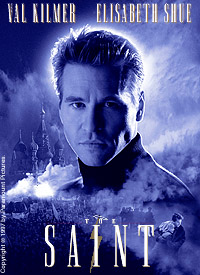
 to the 1997 News page.